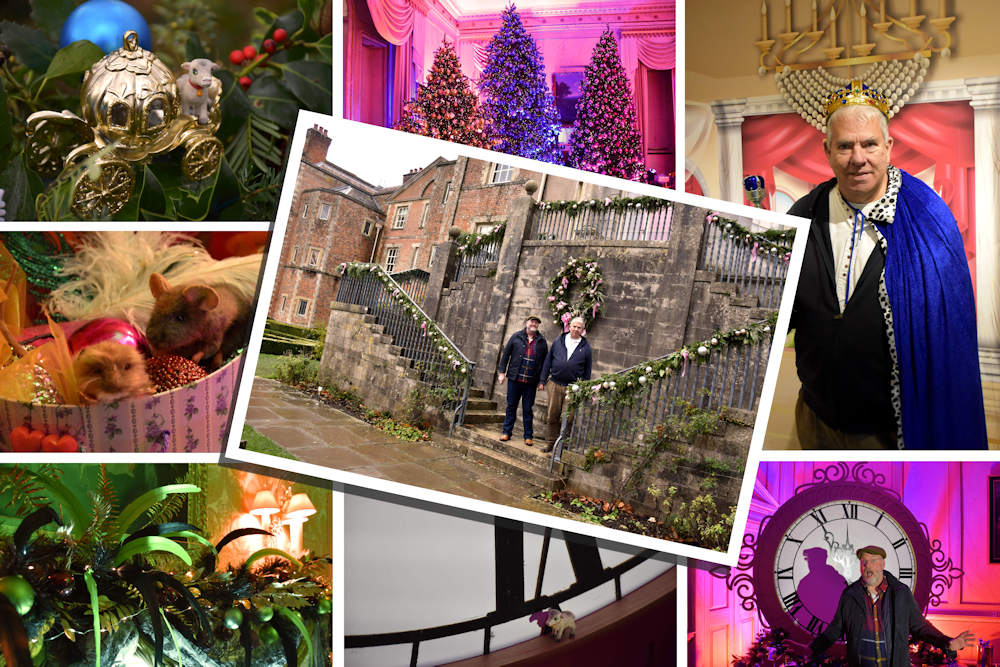
Mottisfont Abbey becomes a Winter Wonderland every year, and the theme in 2025 was Cinderella, pantomime-style.
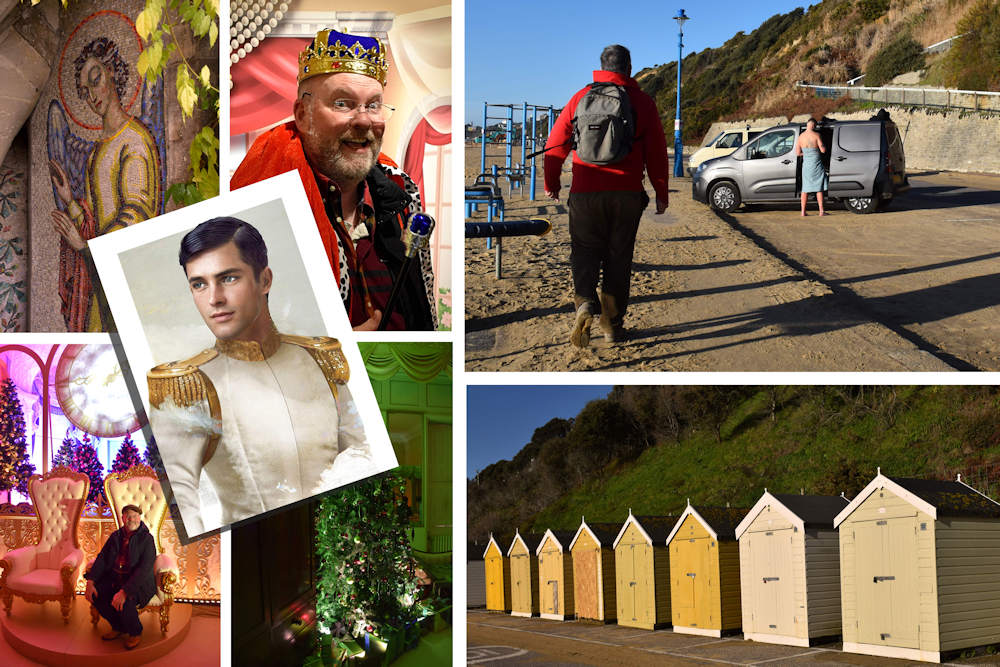
We enjoyed looking at the decorated rooms and dressing up. The next day, we went for a walk on Bournemouth beach.
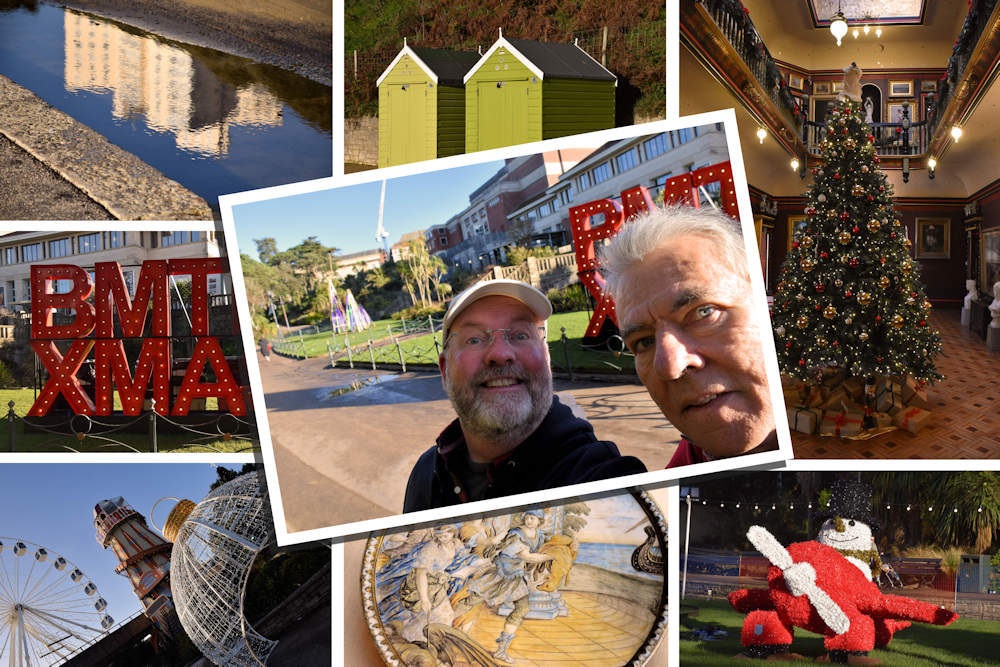
We go to Bournemouth often but always find new things to admire. The Russell Coates Art Gallery was beautifully decorated for Christmas.
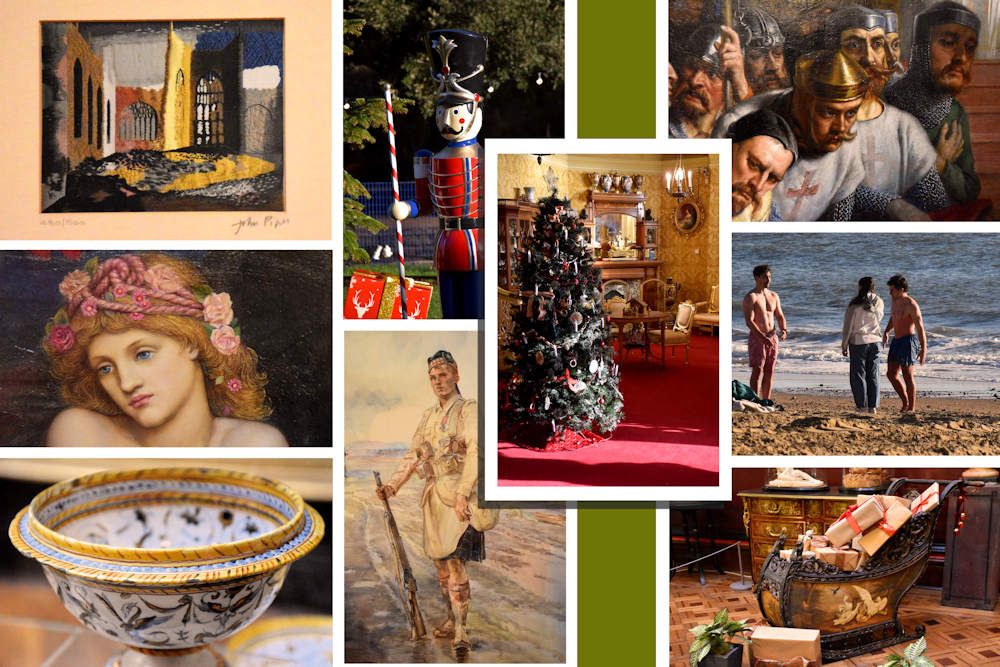
Beautiful details, including the embroidery picture of a bombed-out cathedral, top left, and a highly decorated Italian bowl, bottom left.
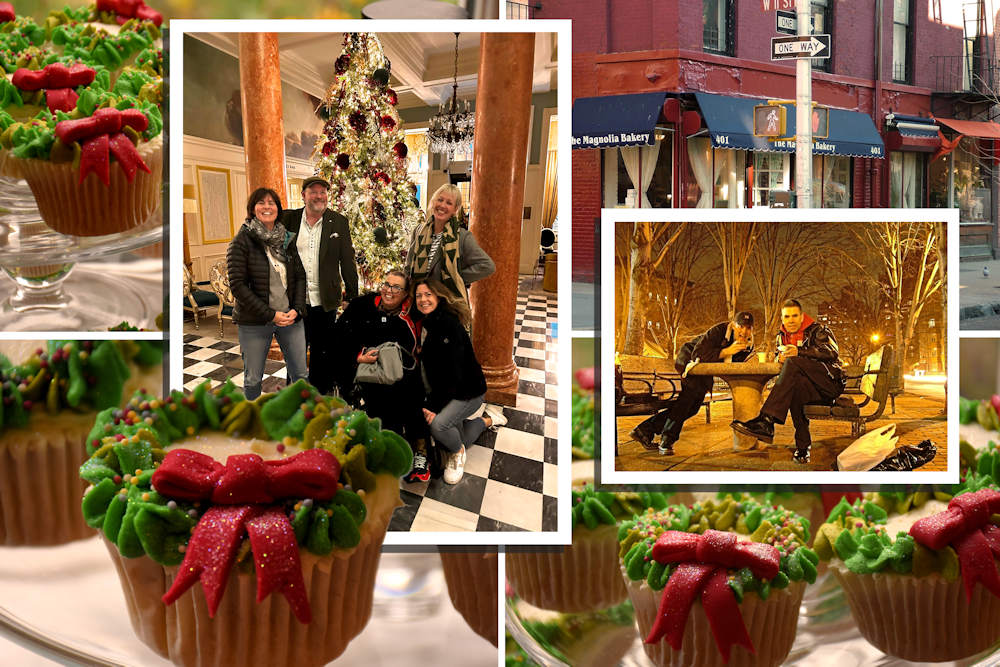
When we discovered the newly opened Magnolia Bakery in New York in 2004 (pictures above), it was like stepping into my grandmother's kitchen. Since then, I have made hundreds of vanilla buttercream cupcakes following their famous recipe. This year, I put a Christmas spin on them and made them fancy for the holidays. I also met up with friends for lunch.

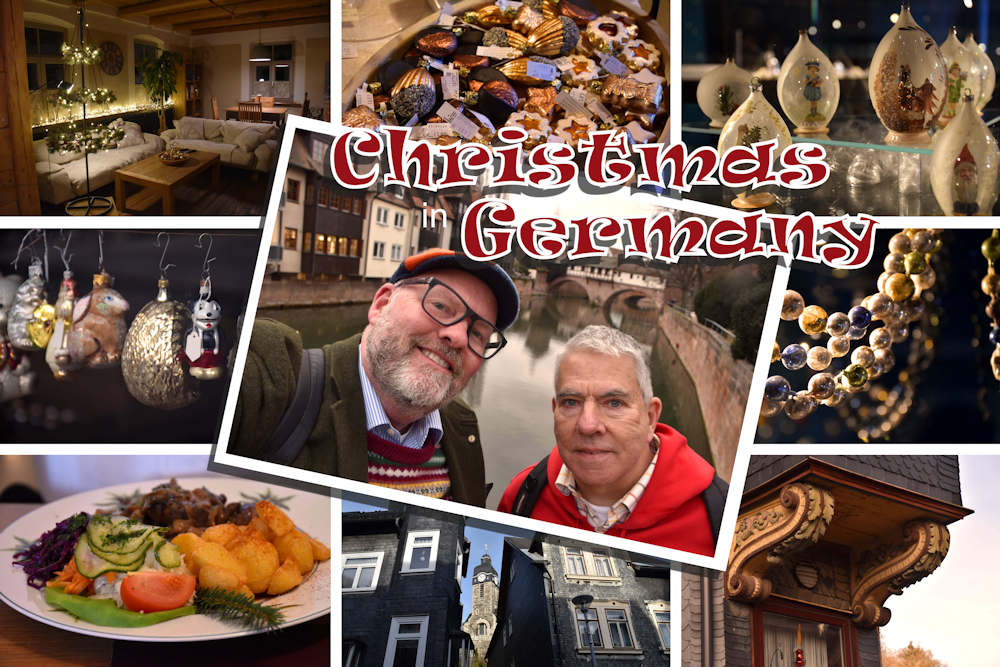
We chose to spend Christmas in eastern Germany because of the wonderful Christmas markets and undiscovered Invaders in Munich. We went to west Germany in the summer of 2024. This time, our spacious AirBnB apartment was a renovated barn near Kasendorf.
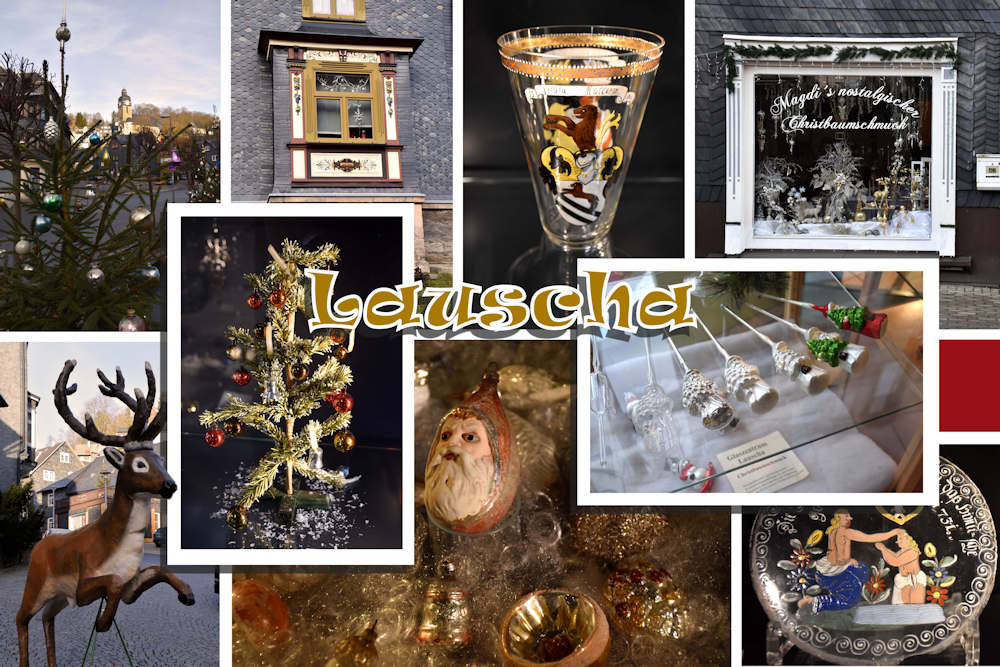
On our first Sunday, we visited Lauscha, where old fashioned glass Christmas ornaments were first made. We visited several shops and a museum dedicated to glass.
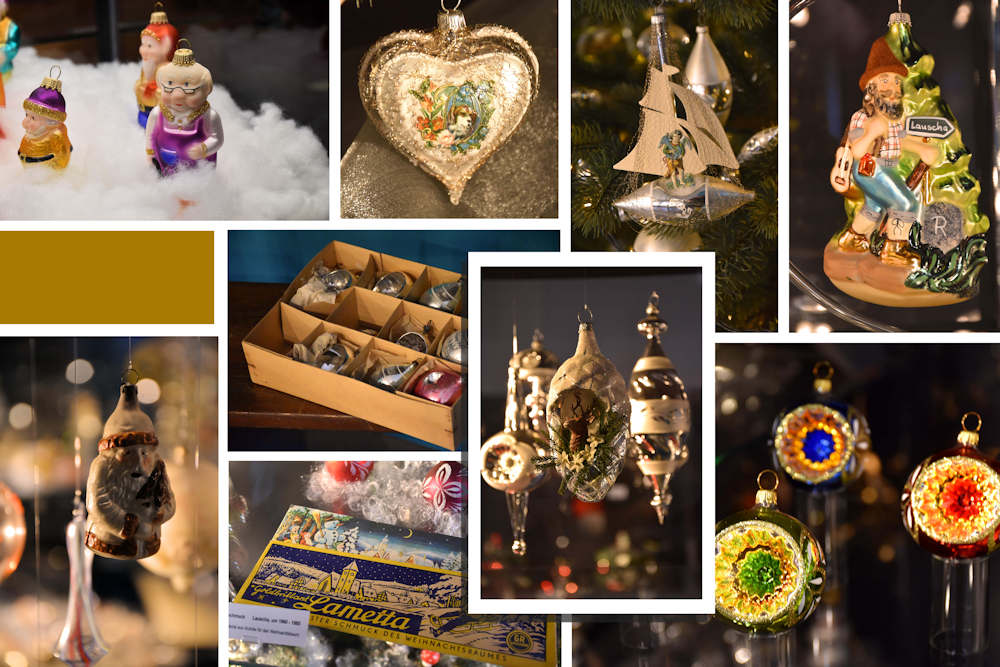
Vintage ornaments at the Museum of Glass Art.
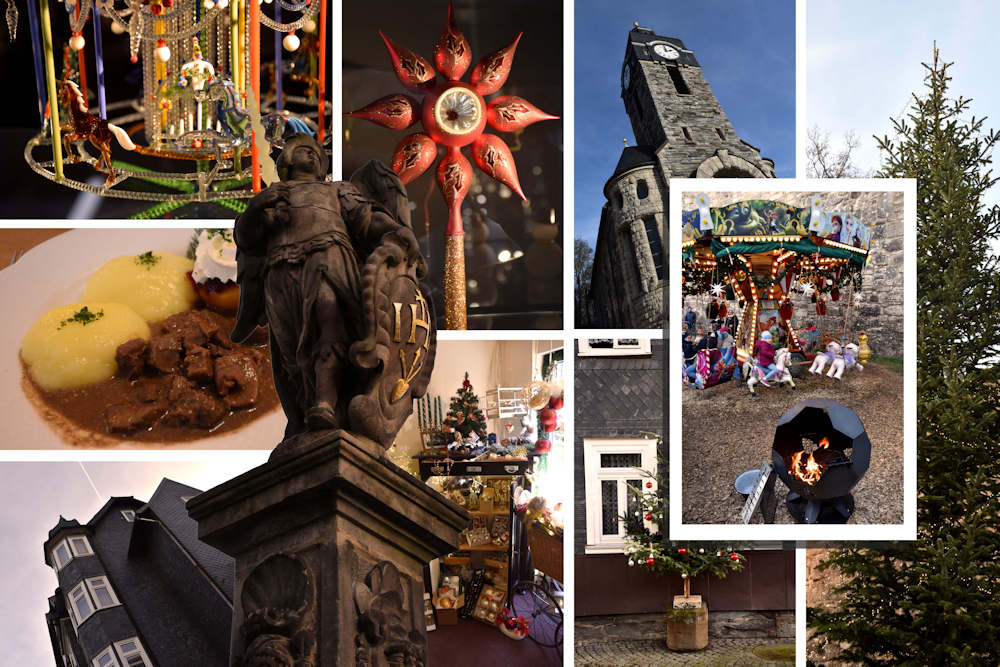
We had a traditional German lunch at Bürgerstuben Lauscha, before driving south to visit an outdoor Christmas market in Kronach. I briefly danced with a German woman before we had Glühwein and a sausage.
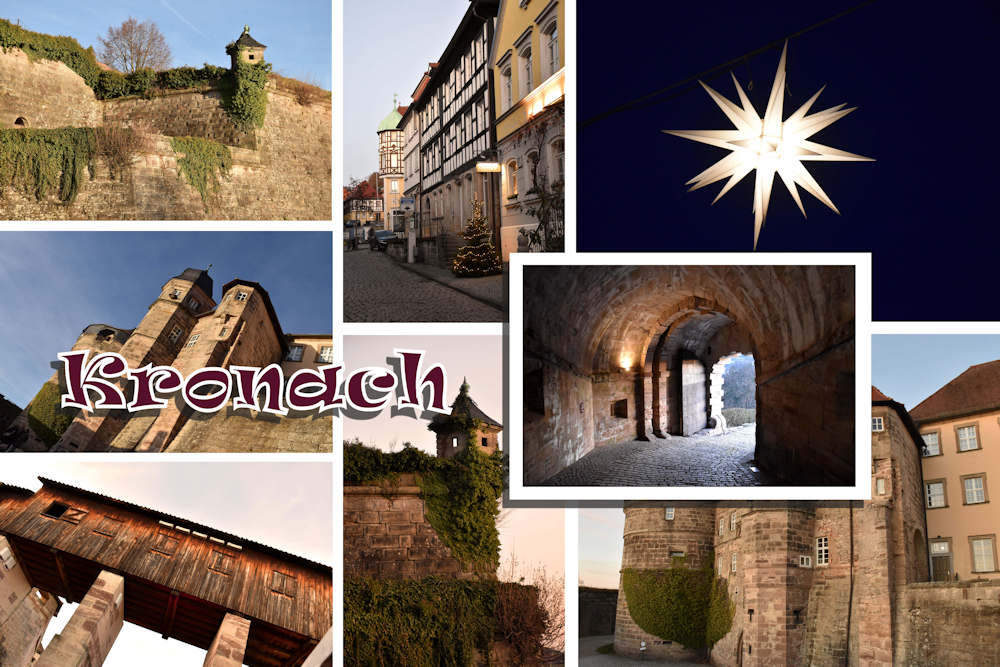
The market was held in the impressive fortress.
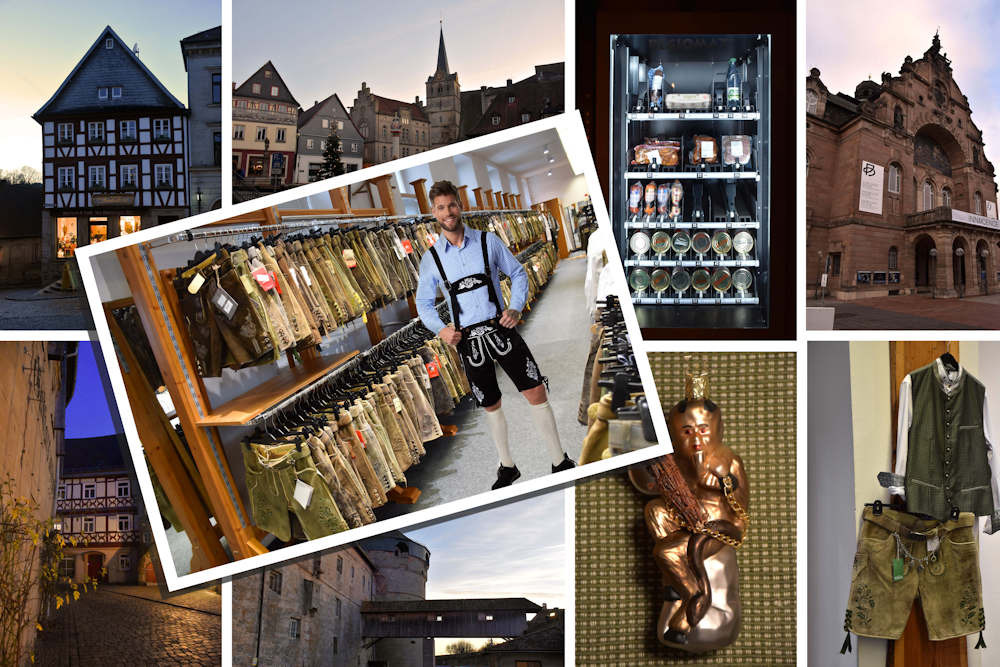
Most of these are scenes from Kronach, along with the 24-hour pork vending machine just across the road from our apartment, the Krampus Christmas ornament I bought in Lauscha, and a Lederhosen shop in Nürnberg.
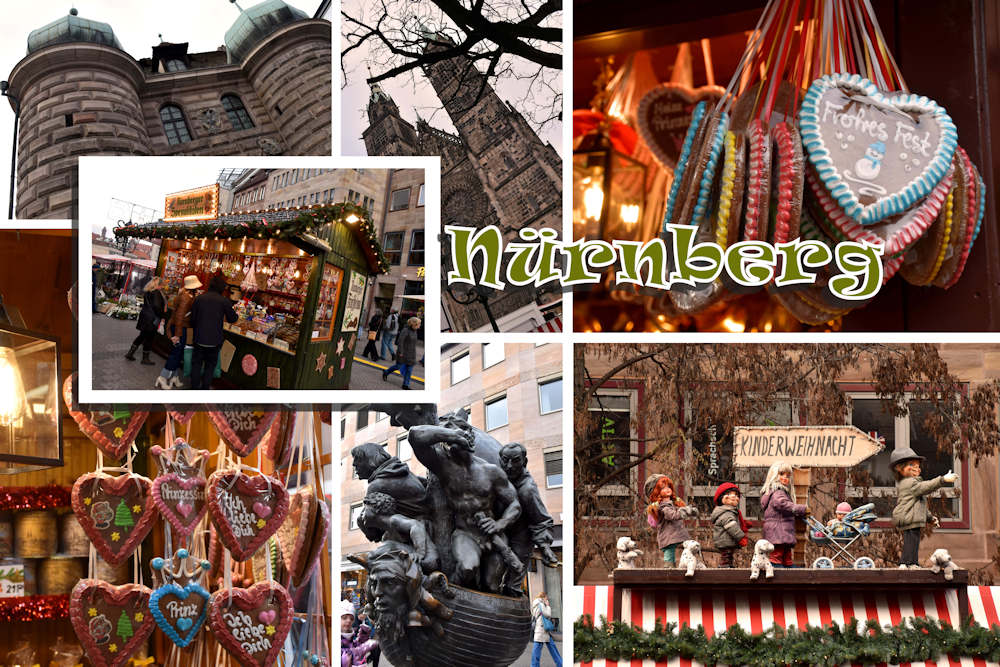
Nürnberg was picturesque. We bought beeswax candles and a truffle from the markets before exploring more of the town.
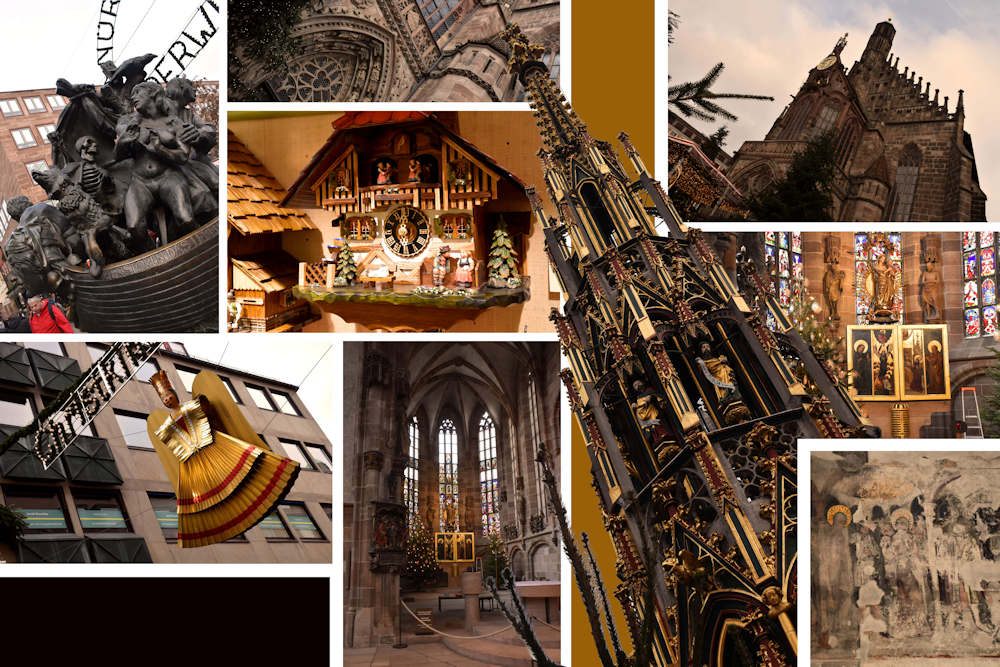
Pictured above are the Ship of Fools statue, St Lorenz Lutheran church, the Beautiful Fountain, the Rauschgoldengel, the symbol of Nürnberg Christmas
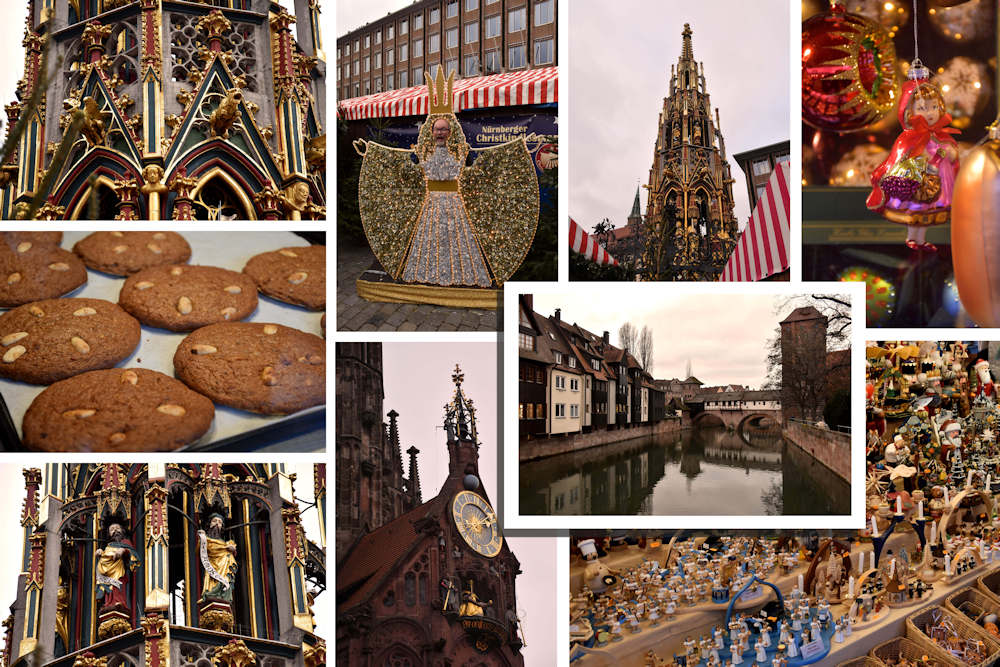
There is an iron ring that every tourist queues to turn on the Beautiful Fountain. We stood and watched. The most special things in this photo are the huge, warm, spiced Lebkuchen that we bought fresh out of the oven. One of the most delicious and memorable things I have ever eaten!
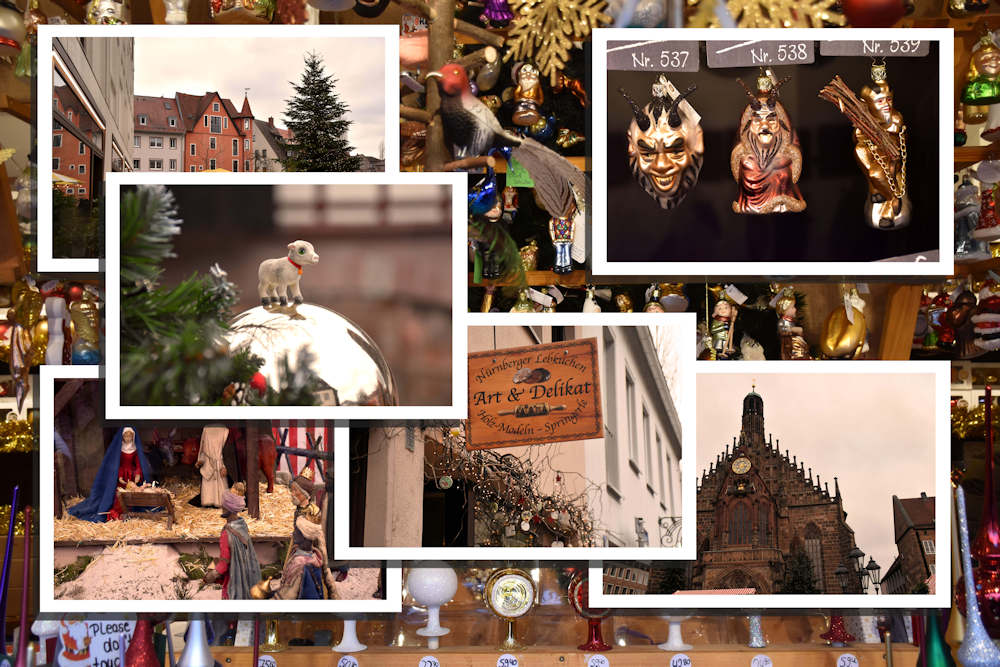
Tiny Cow enjoyed Nürnberg. I bought some cookie moulds at the shop, above.
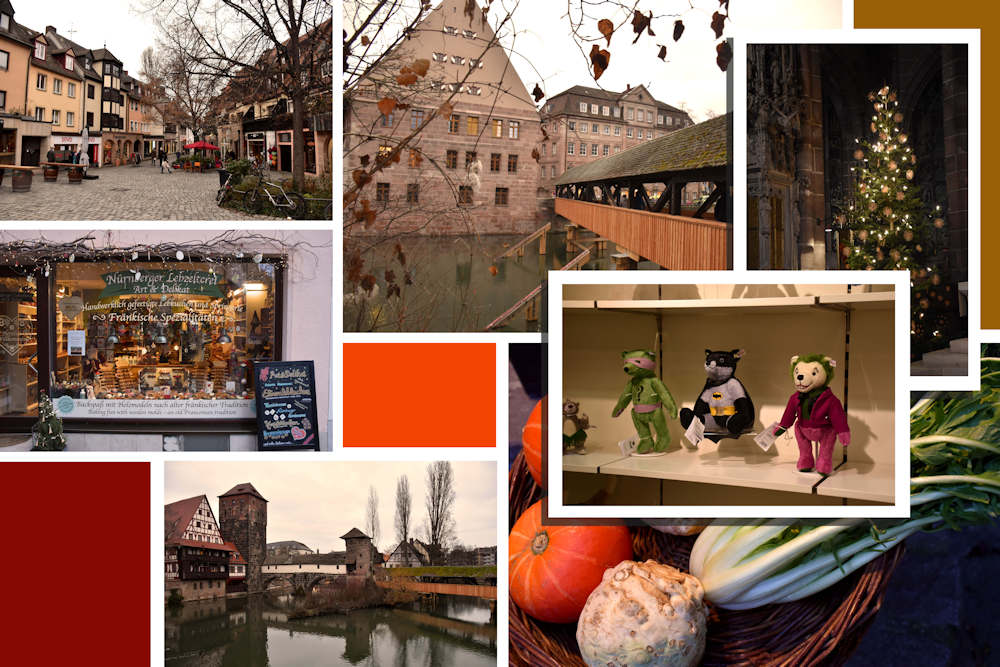
The long Hangman's Bridge was built in 1457 and restored in 1954. I loved the Steiff Batman bears.
We went to see the modern ballet, Noise, Signal, Silence. A very keen and very German usher decided that my camera needed to be confiscated. It rather spoiled the event for me.
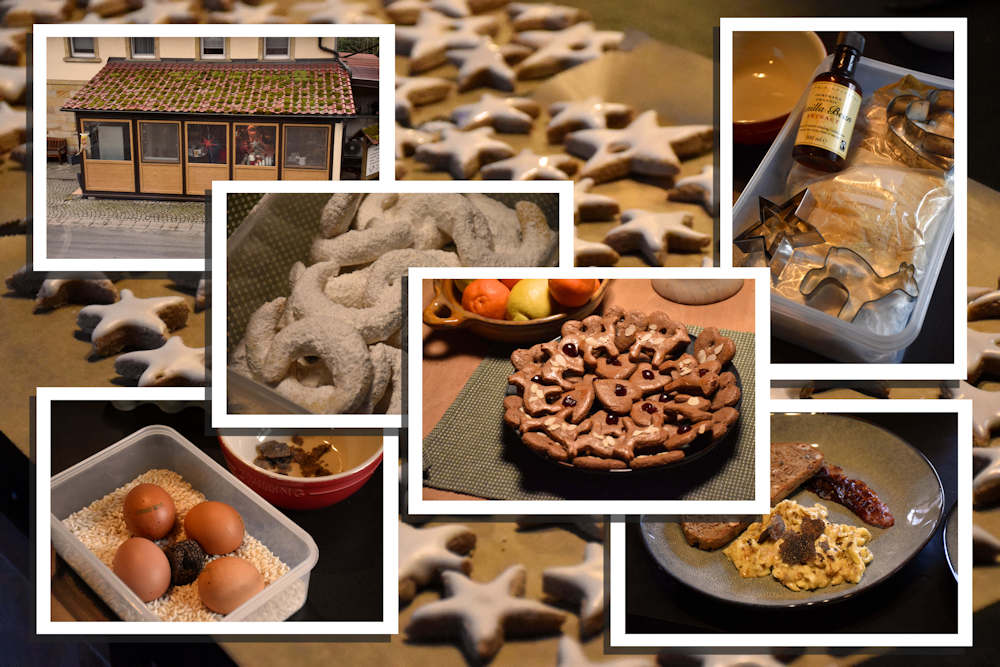
We spent most of Tuesday at home, baking Zimtsterne, Lebkuchen, and Vanillekipferl using an ingredients kit I put together back in the UK. We also enjoyed the first of our black truffle shavings with scrambled eggs.
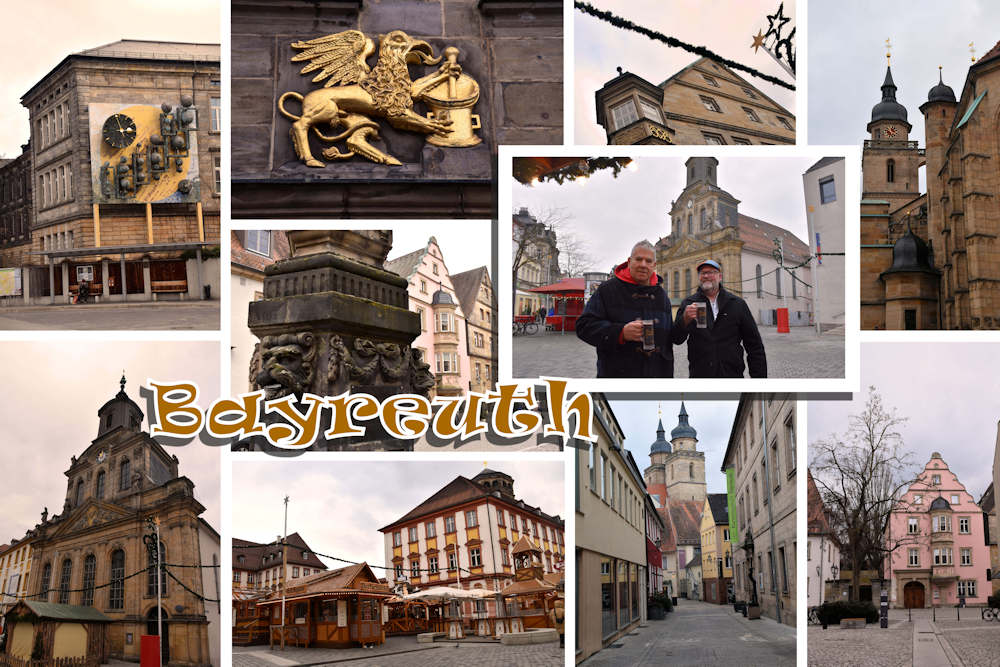
We went to Bayreuth on Christmas Eve, stocking up on the last of supplies and enjoying a glass of hot Glühwein with amaretto in the market square.
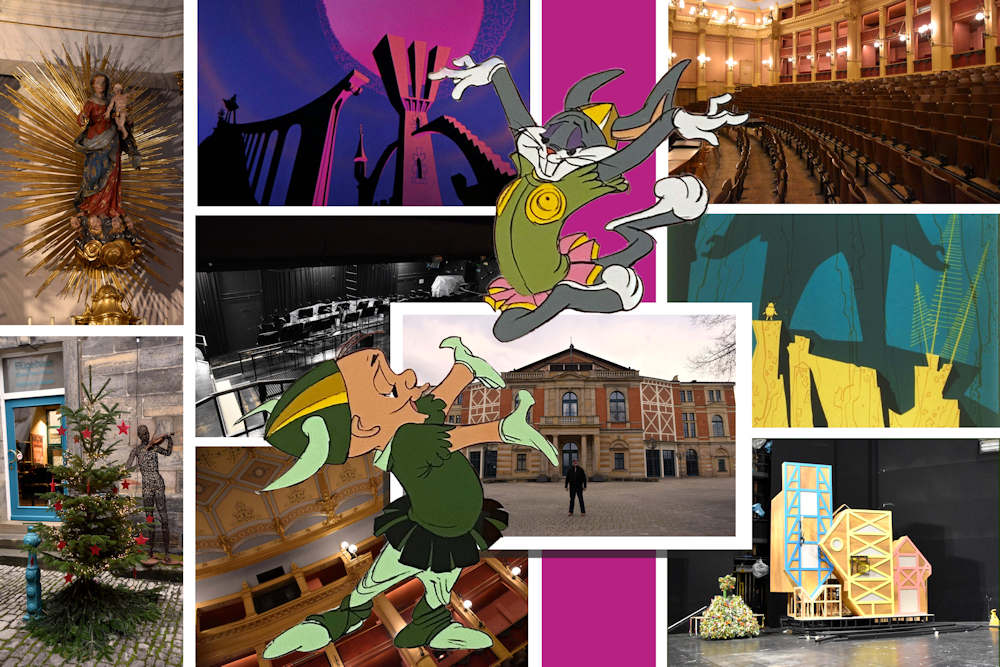
We took a tour of Wagner's Festspielhaus, which, although renowned for its great acoustics, seems like a grim and uncomfortable place to experinece a six-hour opera.
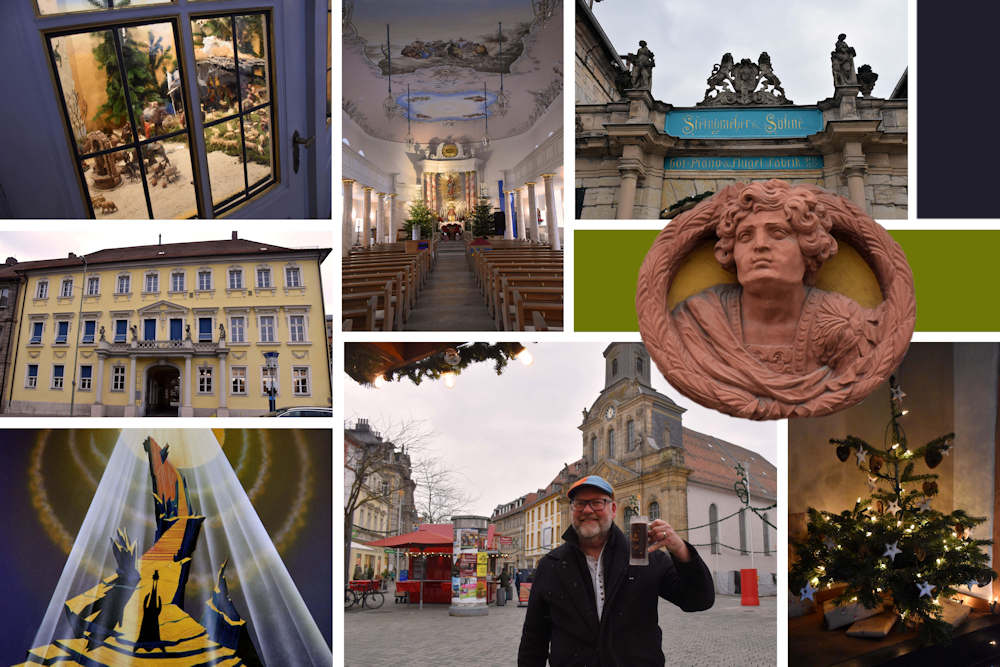
We visited some lovely churches and shops before it started to rain and we returned home.
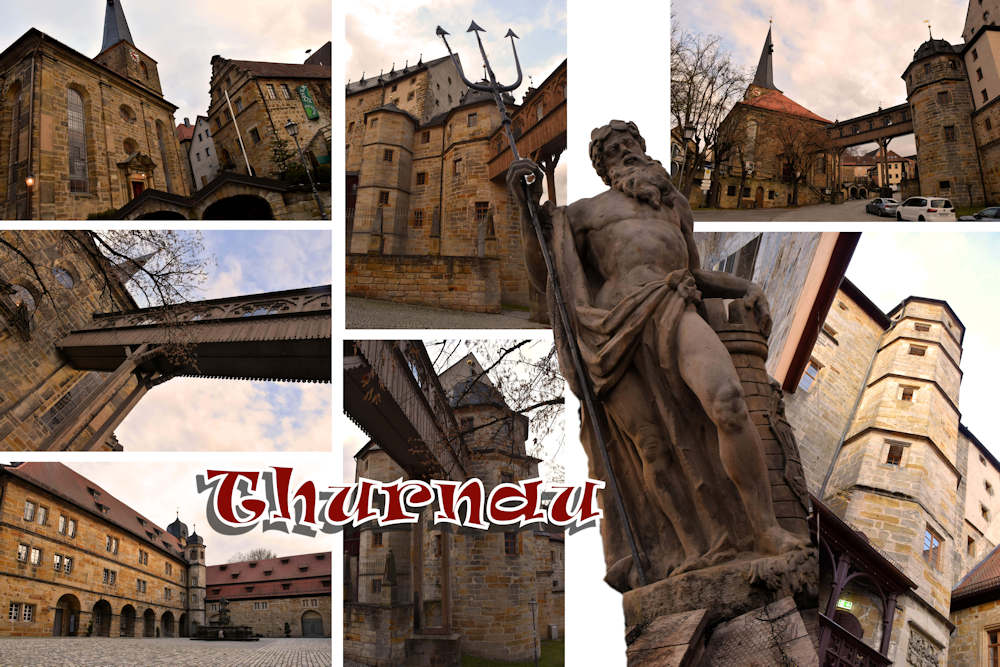
Thurnau is the village we drove through on the approach to our house. It was full of lovely ancient buildings and the church was in full swing with a Christmas Eve service.
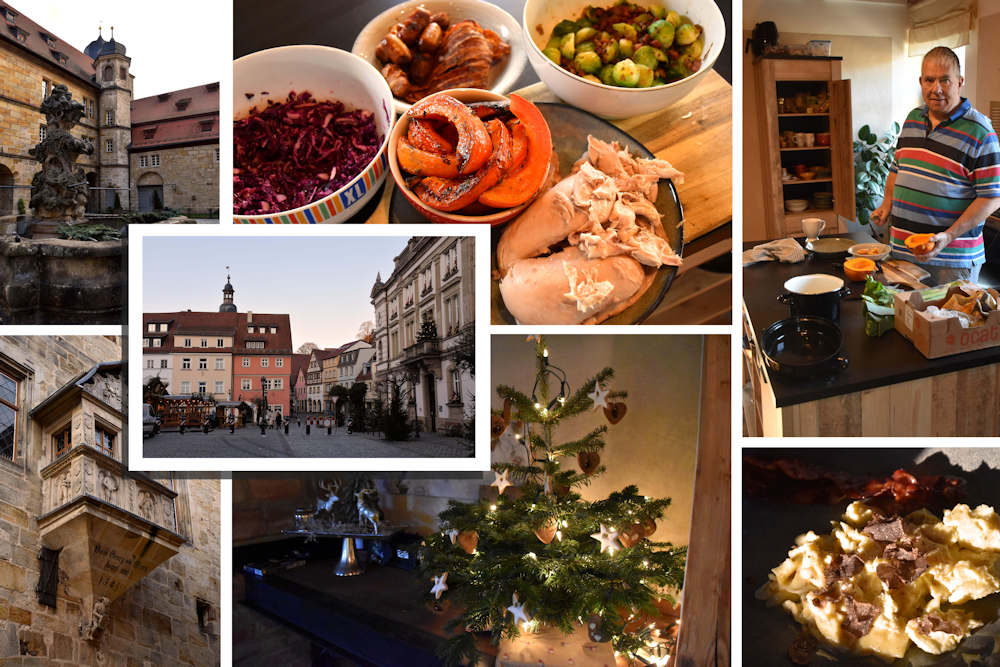
Christmas meal, traditional-style. We ended up buying a frozen chilcken from a health food shop so we could ensure it was organic. It cooked really well and we made our usual stock and risotto with the leftovers. Our mini tree was decorated with homemade gingerbread cookies.
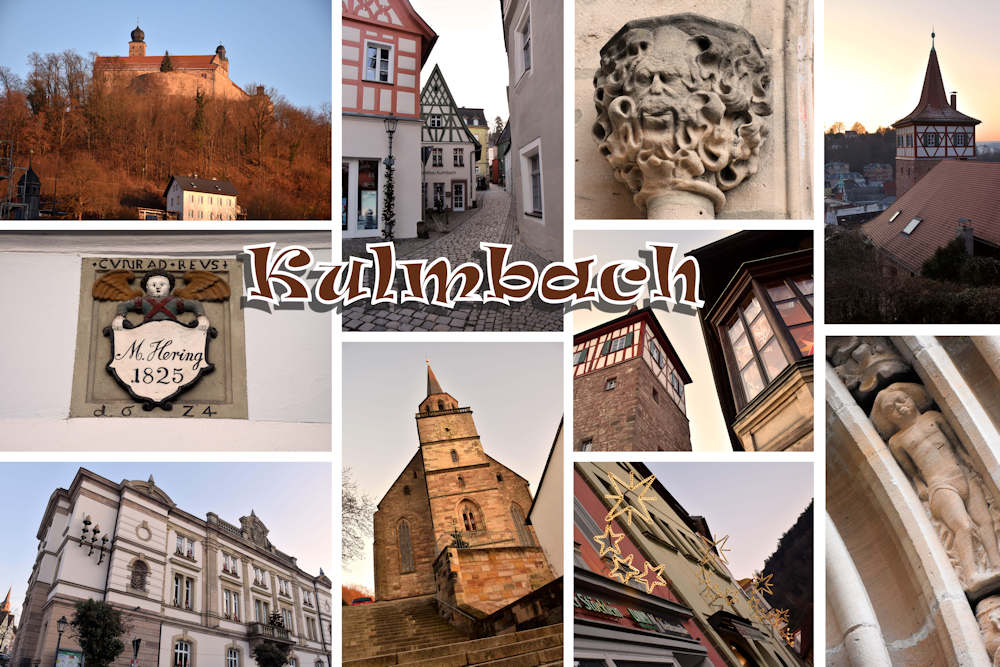
We drove to nearby Kulmbach for a walk around on Christmas Day. It was a lovely and historic town, the home of a 16th Century artist named Hans von Kulmbach, who had his own trail to follow.
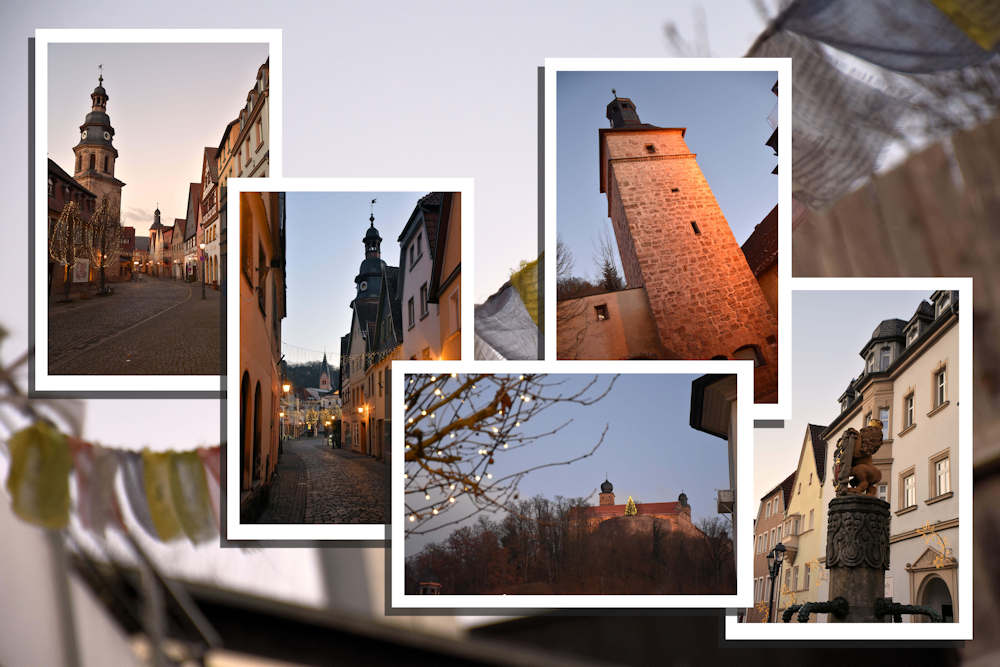
We climbed most of the way to Plassen Castle, but left it for another day. The empty streets looked festive at twilight.
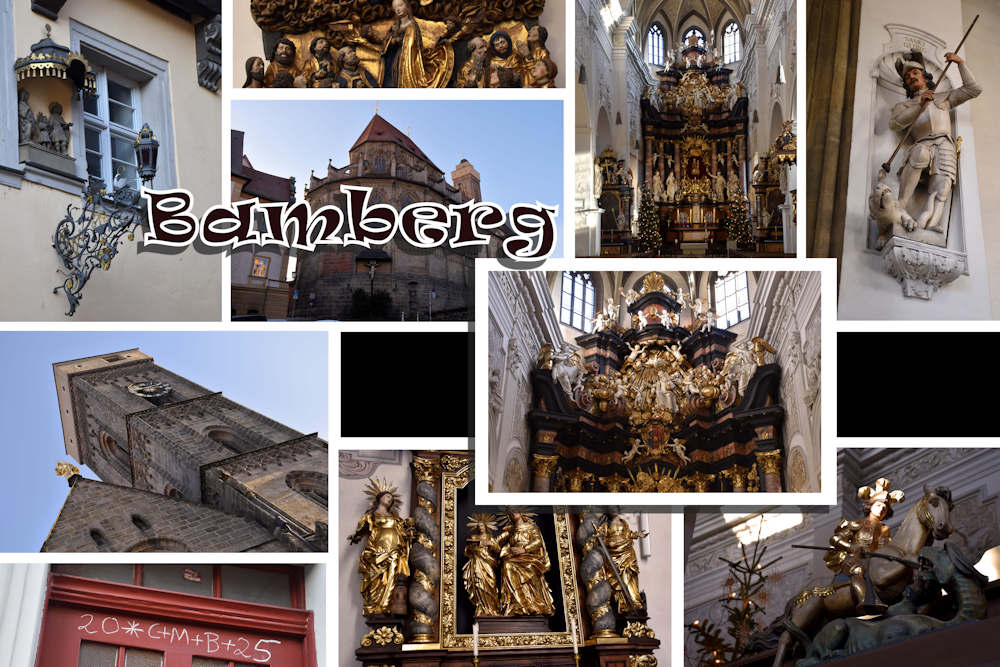
There was a guidebook with driving itineraries in our apartment, and from it we chose Bamburg as a place to visit on Boxing Day. What a treat!
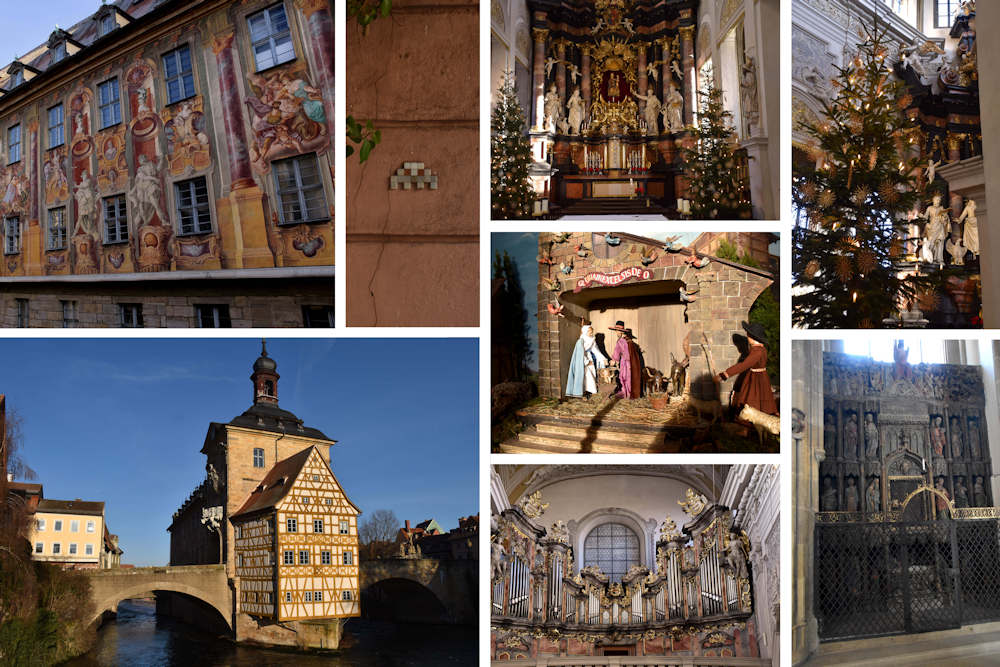
Bamberg's Altes Rathaus is covered in covered in trompe l’oeil frescoes.
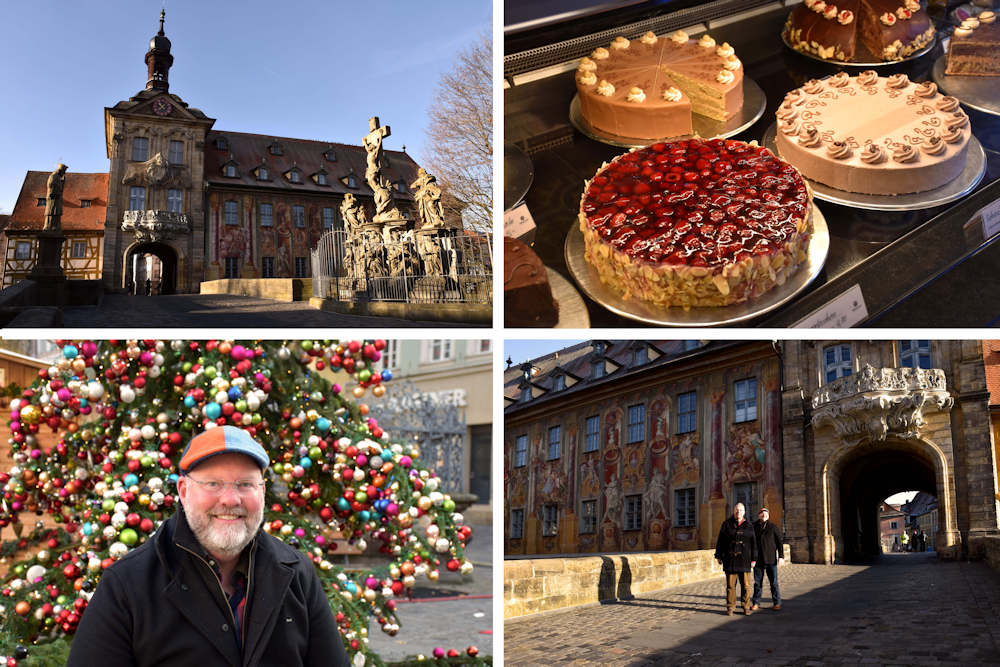
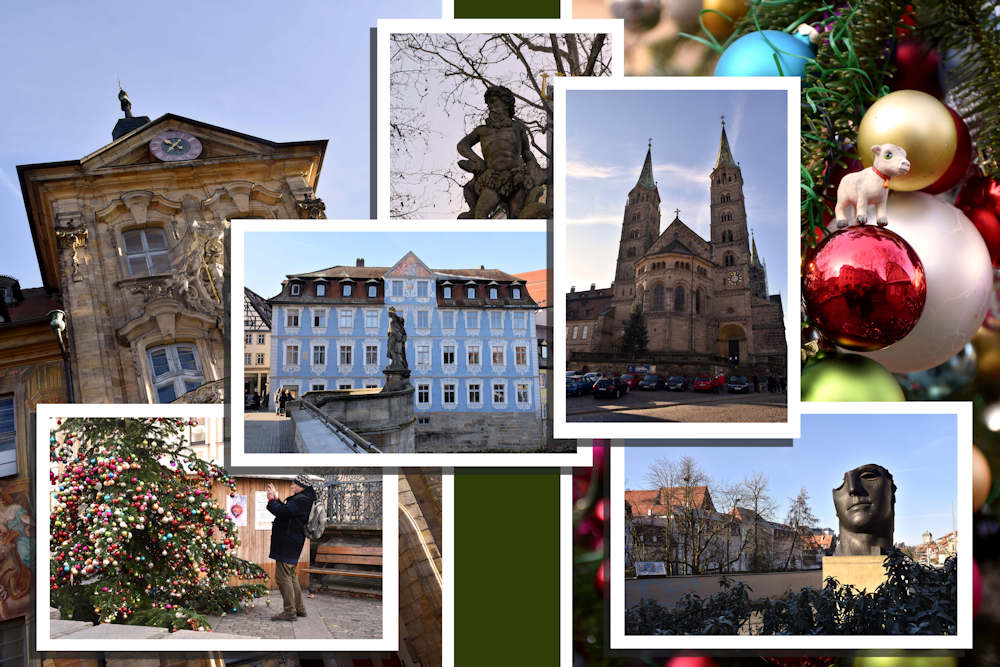
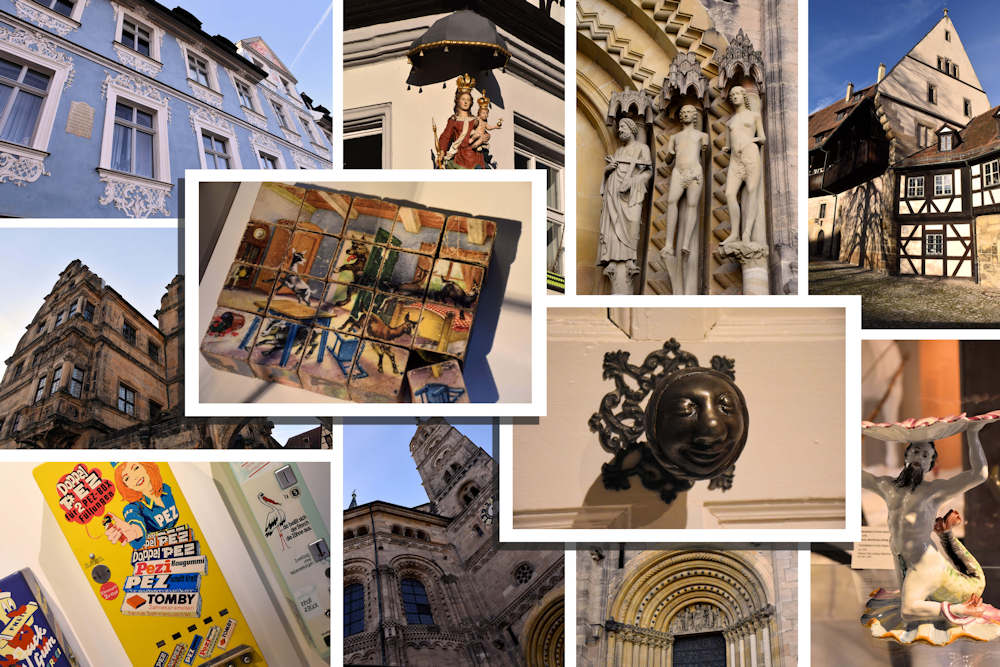
We were lured into a temporary exhibition at the medieval court. The exhibition was small, but it did have the original (I think) Apfelweibla doorknob that inspired E.T.A. Hoffmann to write The Golden Pot, in which a young, frightened student knocks over an old applemonger’s basket and flees after giving her all his money; later he sees the old woman’s face in a doorknob, which causes him to faint.
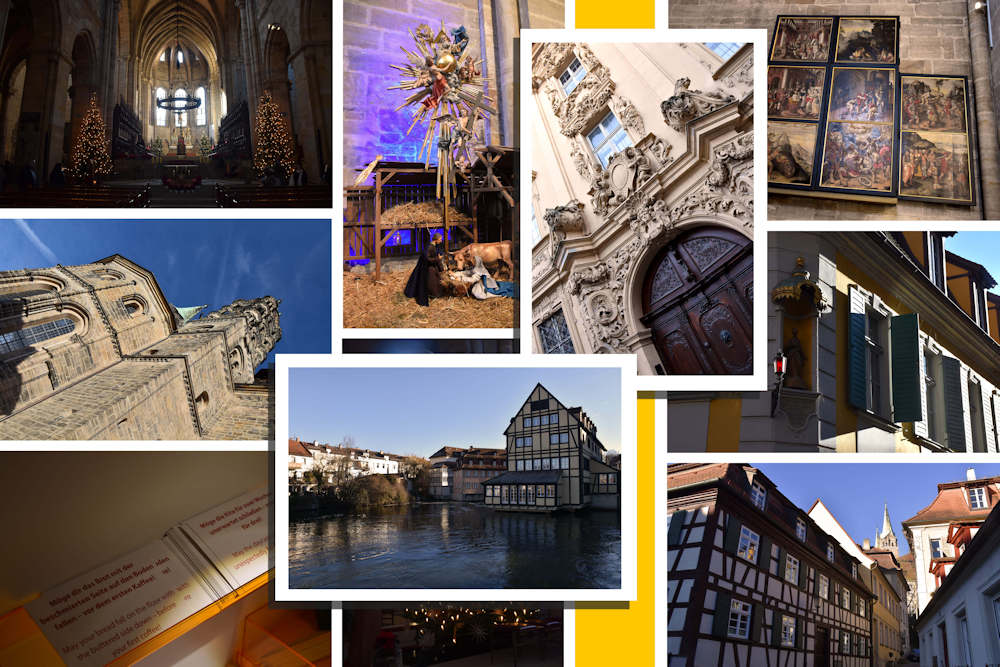
Bamberg cathedral and surrounding streets and Little Venice
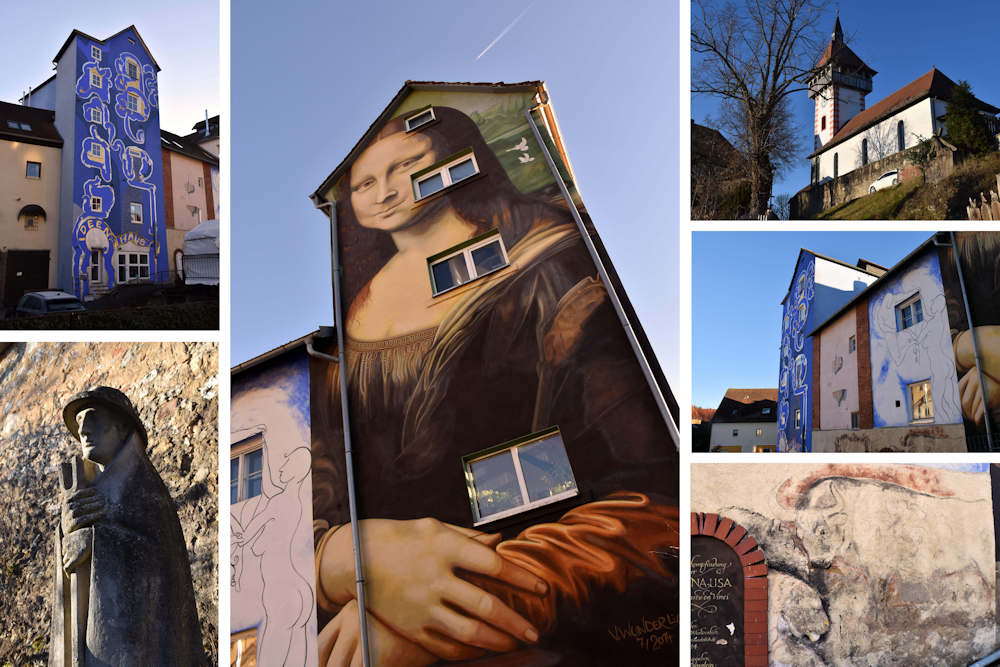
We stopped in Hollfeld to see the Mona Lisa fresco and others, before heading back home to watch Young Wallender.
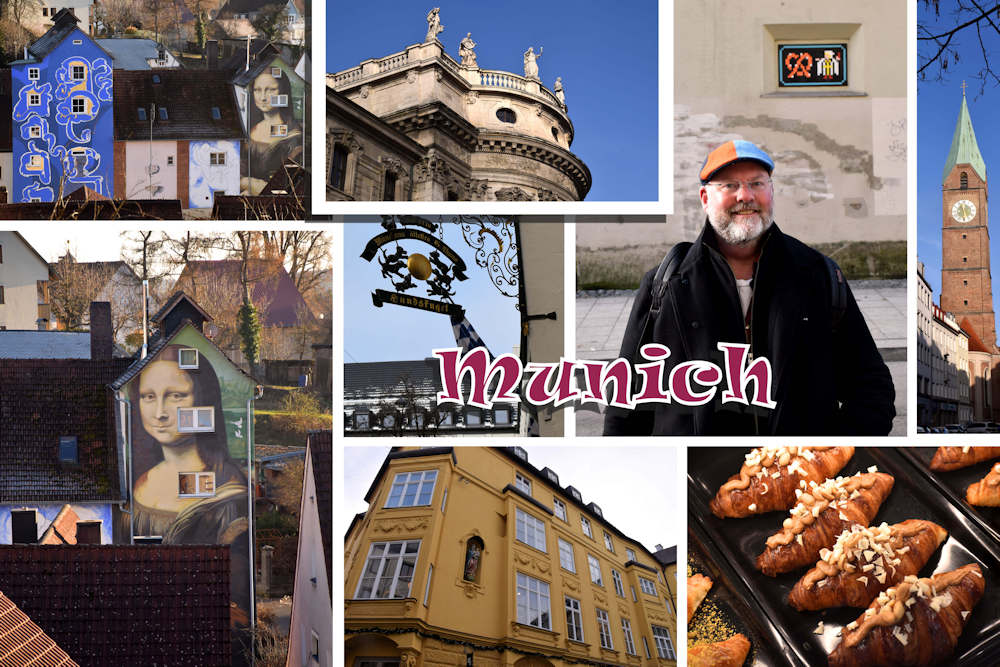
We stayed overnight in Munich, primarily to seek out the Invader mosaics in the city. We did a lot of double backing on ourselves the first day, thanks to a ridiculous AI-generated map. The second day, we found the remaining Invaders by car. The peanut butter croissants, above, were life-alteringly good.
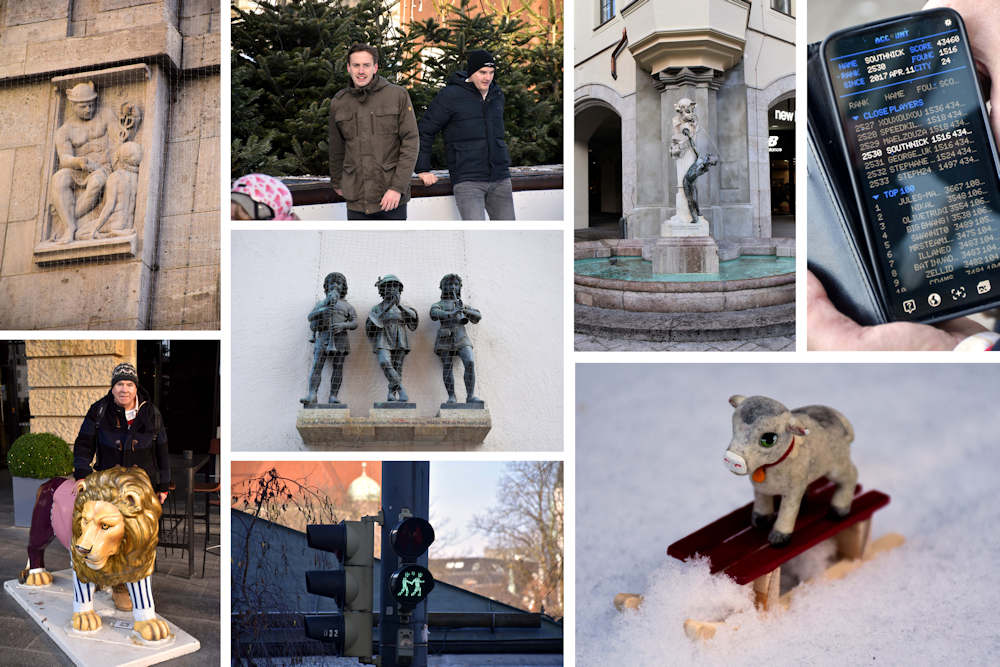
As we moved up the Flash Invader leaderboard, Tiny Cow enjoyed the snow on his new sled.
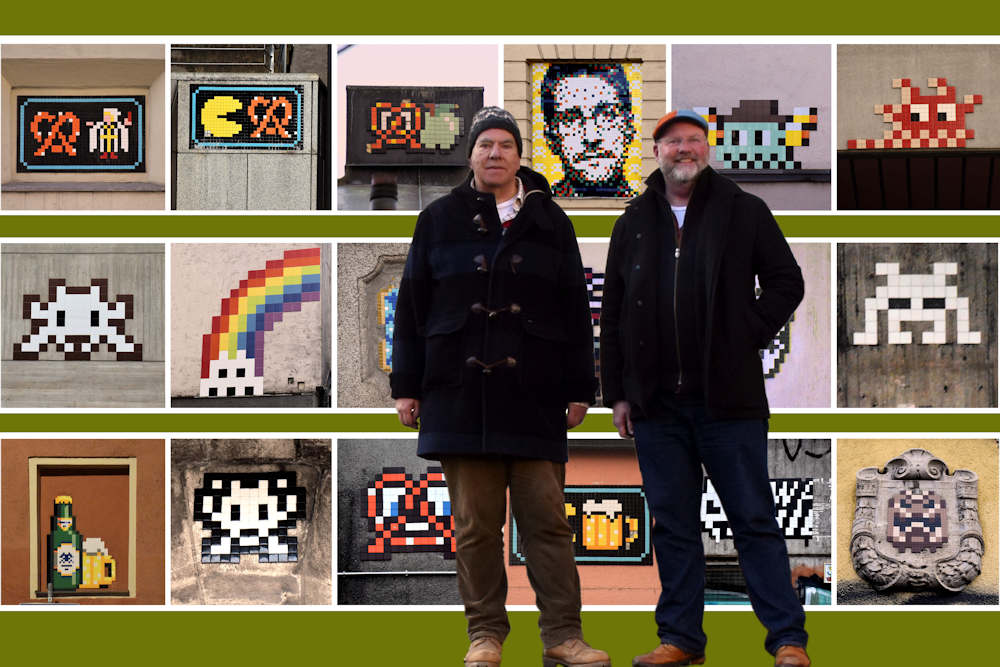
We found all the available Invader mosaics in Munich.
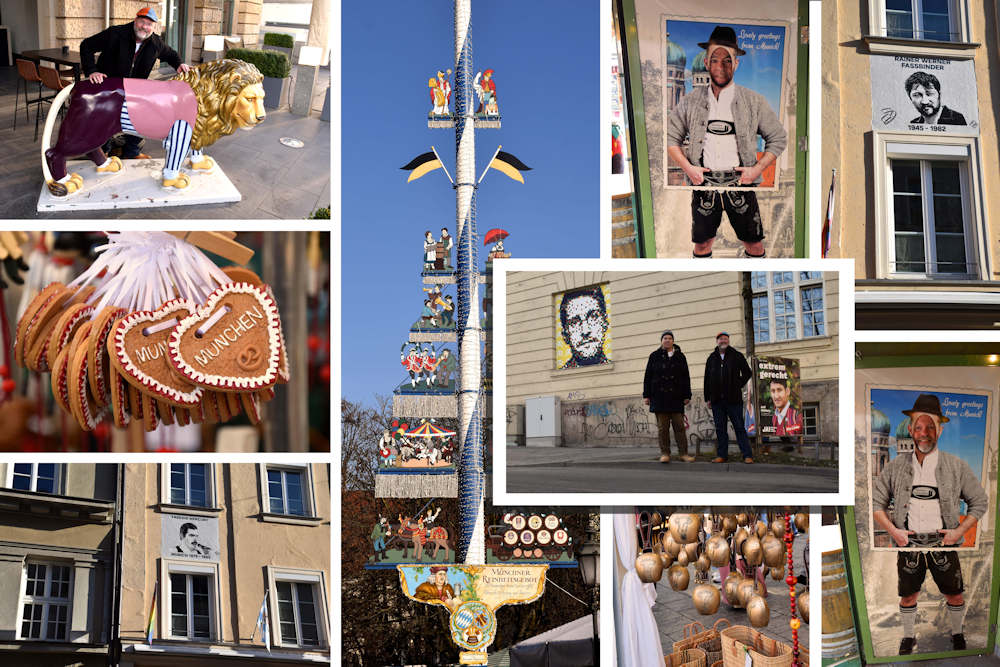
The Viktualienmarkt promised great food, but we ate sandiches at a nearby café. The Edward Snowden Invader was one of my favourites.
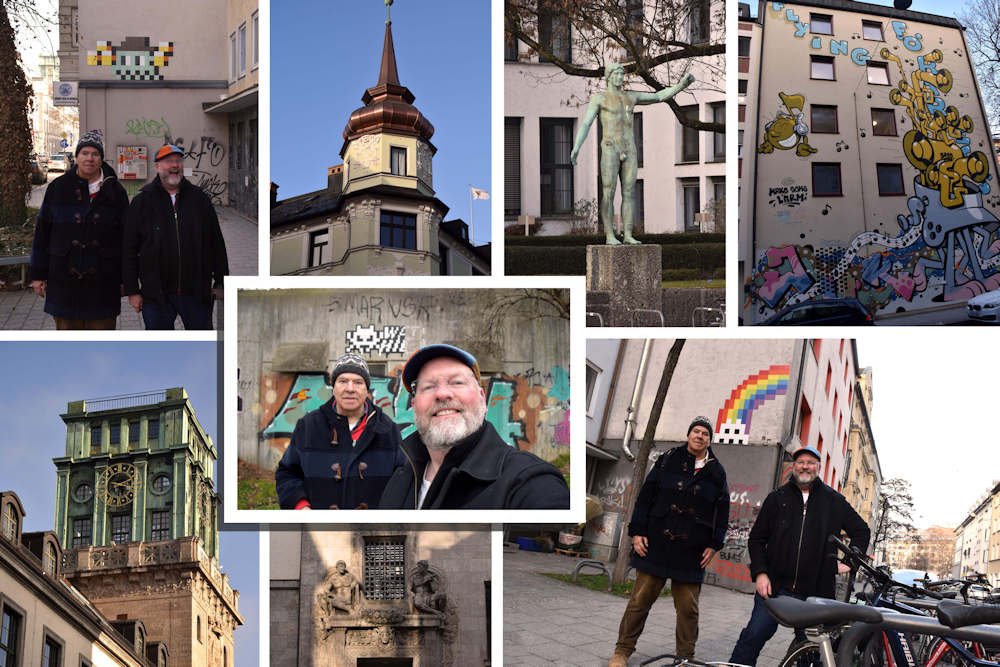
These are some of the more rewarding Invader finds.
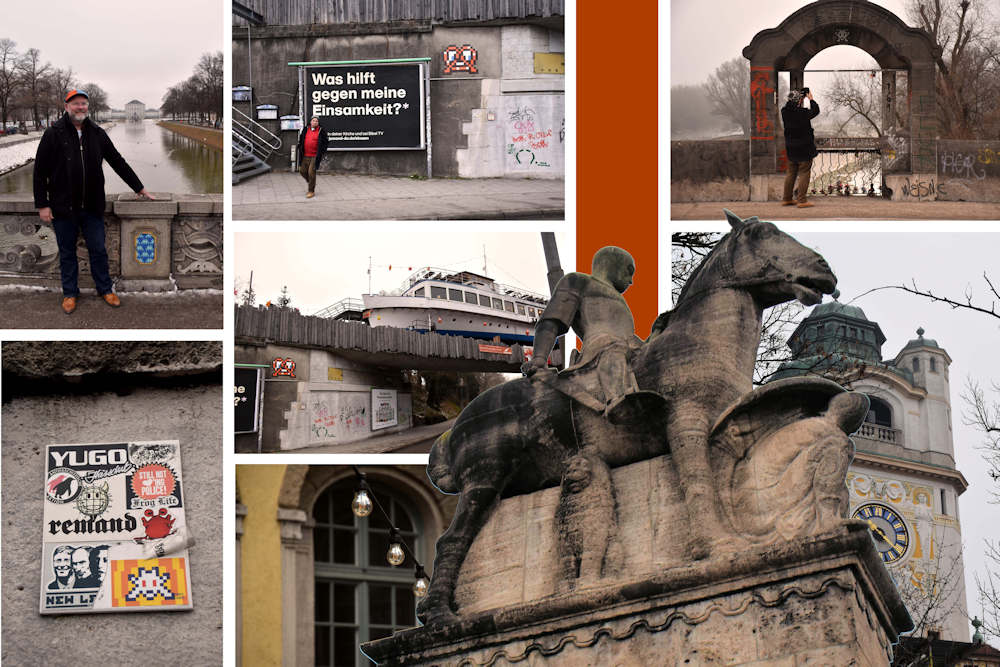
The farthest flung Invader was near Schloss Nymphenburg. The black and white one under the bridge arch was the only one that wasn't flashable.
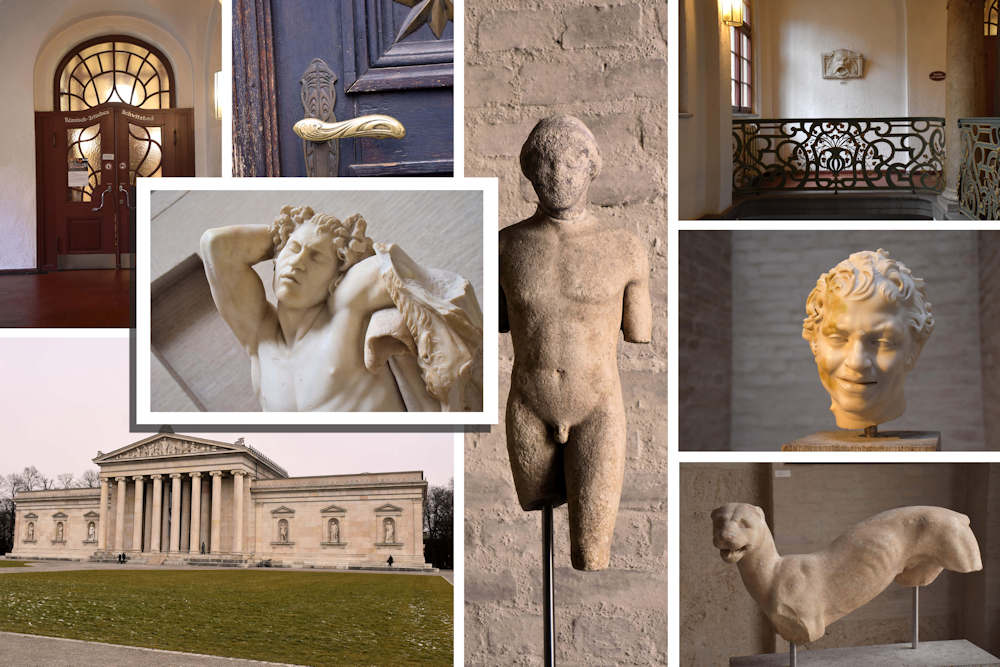
We left our car near the Art Nouveau Müller’sches Volksbad, where the final Invader mosaic was found. Then, we headed for the Glyptotek, which holds treasures from ancient Greece and the Roman Empire.
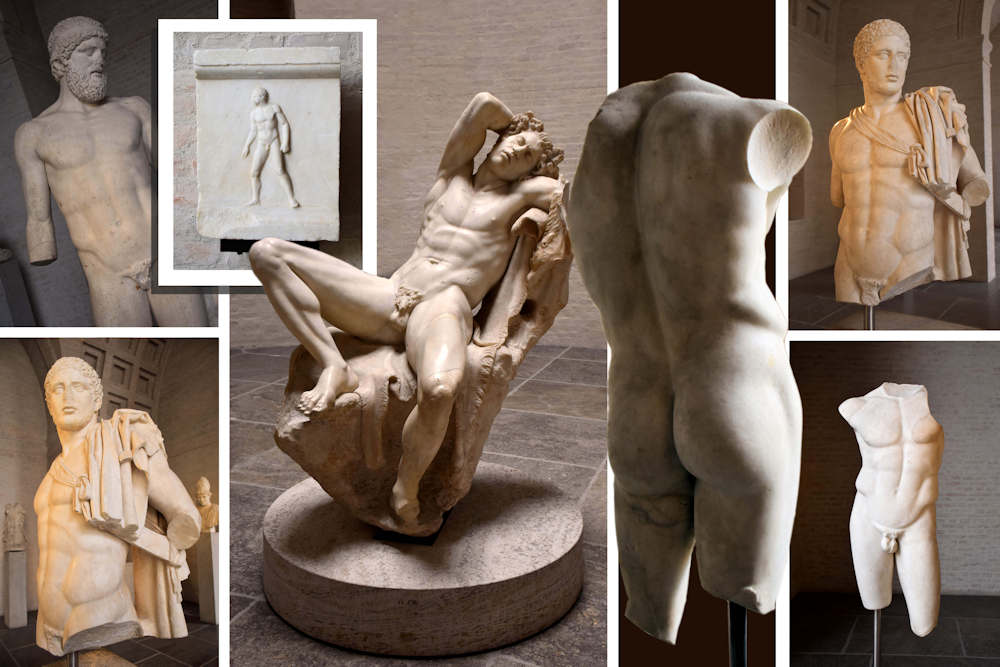
The Barberini Faun (or "Drunken Satyr") is a renowned Greek Hellenistic marble sculpture (c. 2nd century BCE). It depicts a reclining, intoxicated, or sleeping male mythical figure—a companion to Dionysus—characterized by his dramatic, sprawled posture, detailed anatomy, and expressive, exhausted face.
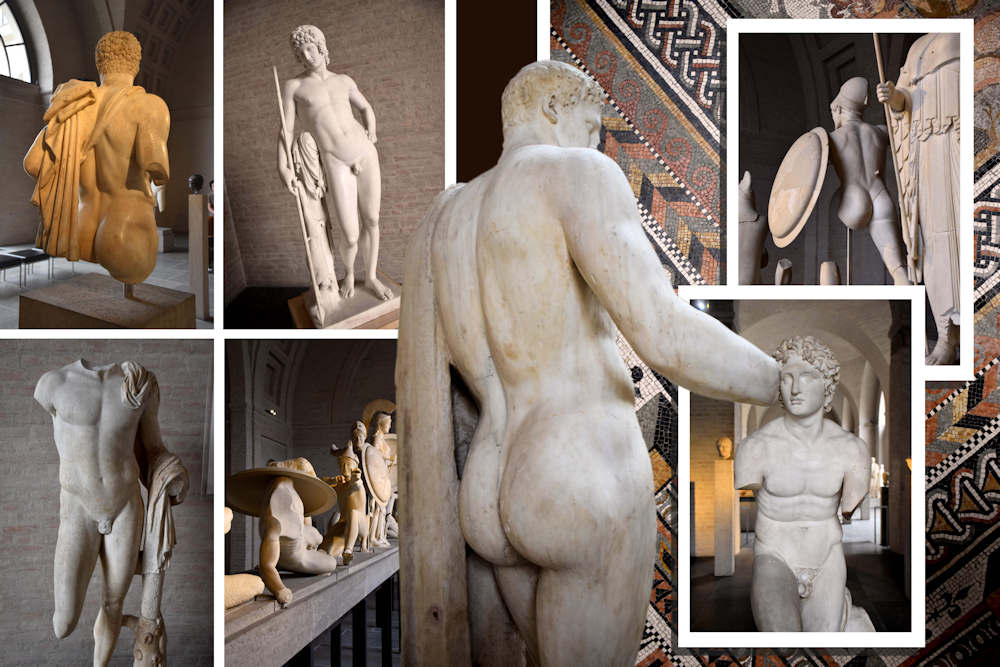
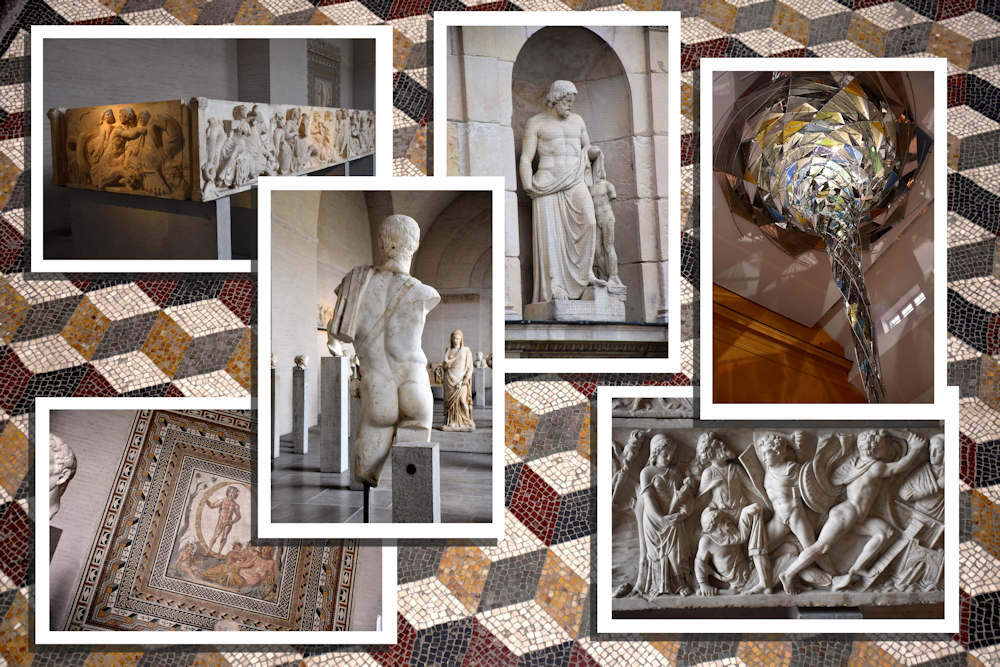
The mosaic was unearthed near Ancona, in Italy.
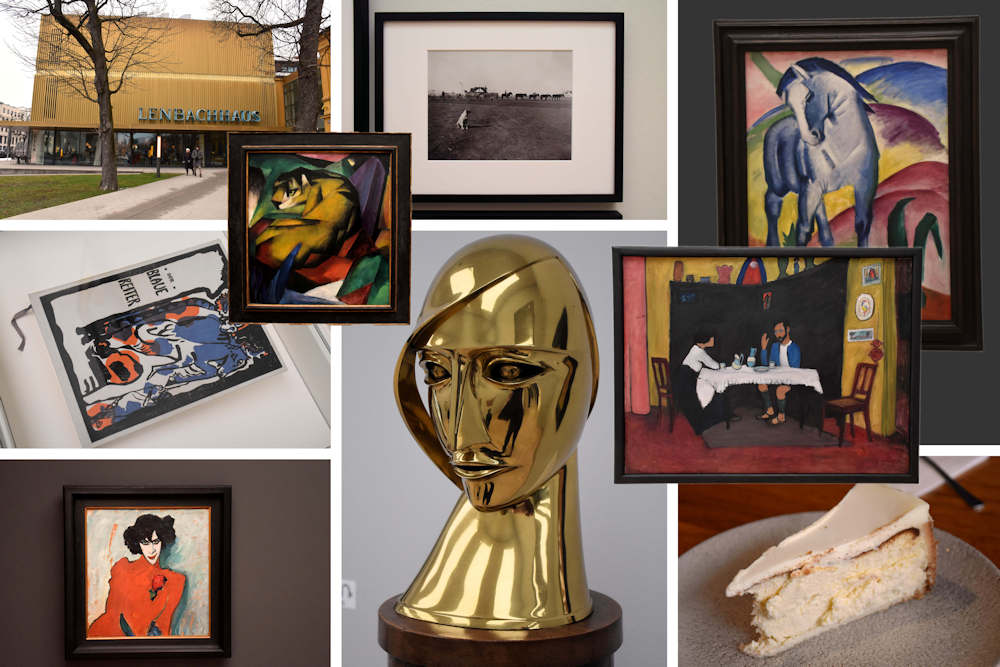
Just across the street from the Glyptotek, the Stadtische Galerie im Lenbachhaus is most known for its world-class and unique collection of works by the artists of The Blue Rider, such as Franz Marc, Wassily Kandinsky, Paul Klee and Gabriele Munter. The black and white photograph is of Plainview, Texas, in 1899. The magnetic portrait, bottom left, is of Alexander Sakharoff, one of the most innovative soloist dancers of the first decades of the 20th century. His androgynous appearance led to him being painted by Alexej von Jawlensky and Marianne von Werefkin in 1909.
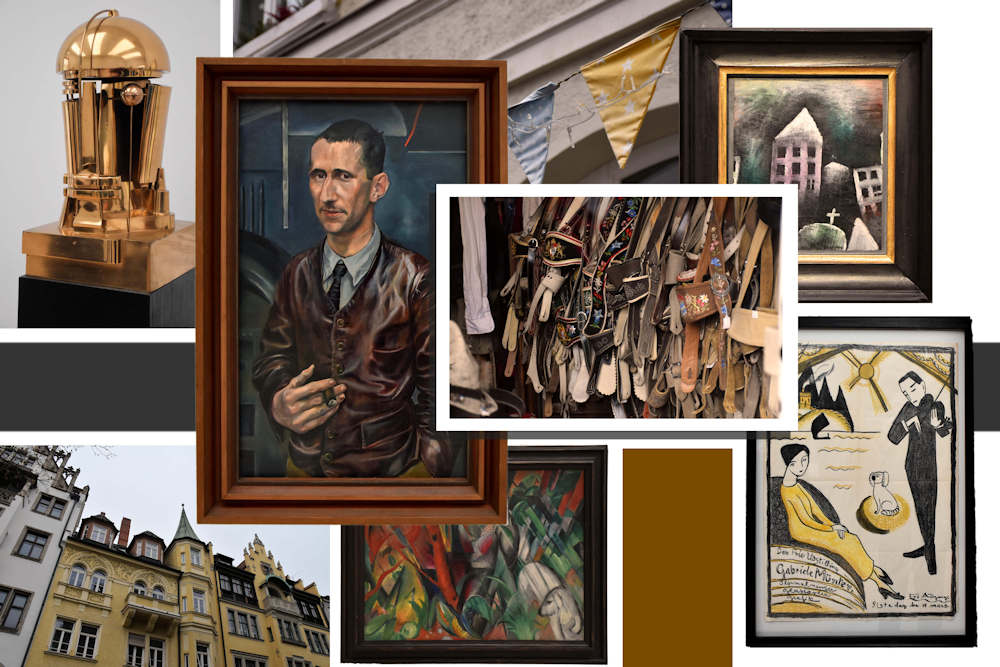
The portrait is of Berthold Brecht.
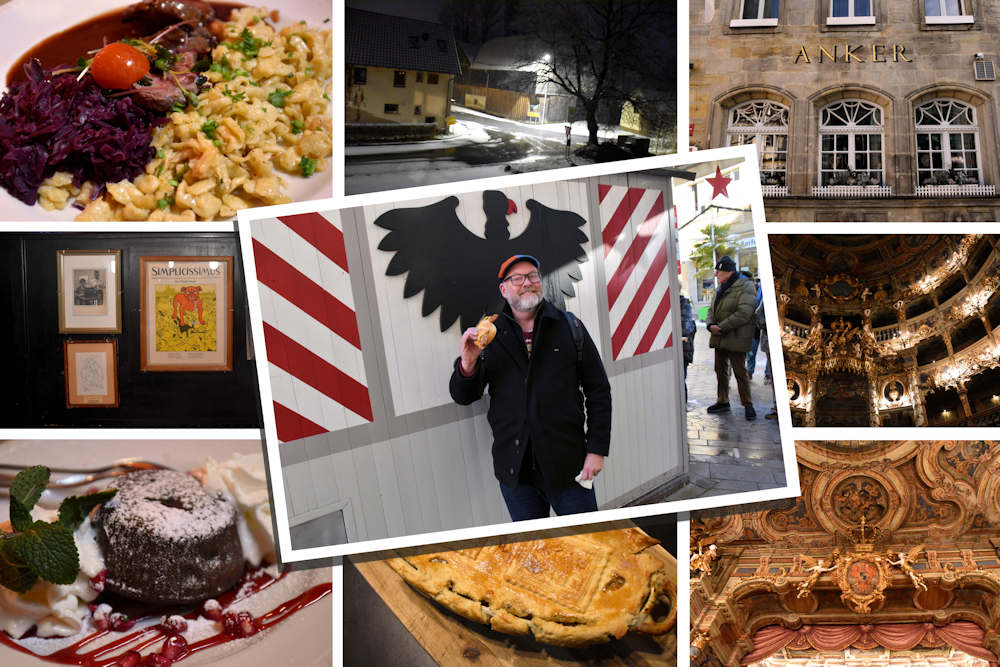
We ate lunch at Alter Simpl, a Munich institution where artists and writers used to gather. It was named after a satirical magazine which featured the red bulldog as its mascot. Other photos are of the gentle slowfall outside our window, and our return visit to Bayreuth, where this popular Wurst stand was recommended to us as a must-try by one of the locals.
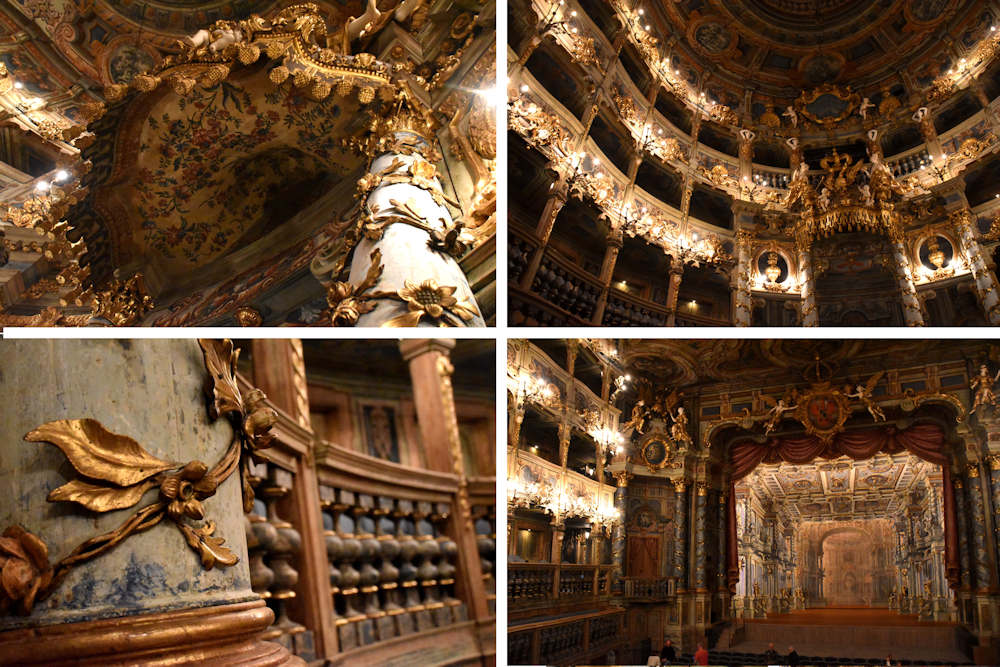
Far more impressive to me than Wagner's Festspielhaus was the Margravial Opera House, designed to be a single-use venue for a royal wedding. Everything was built out of wood on the cheap. Nevertheless, it is still luminous and impressive over 200 years later.
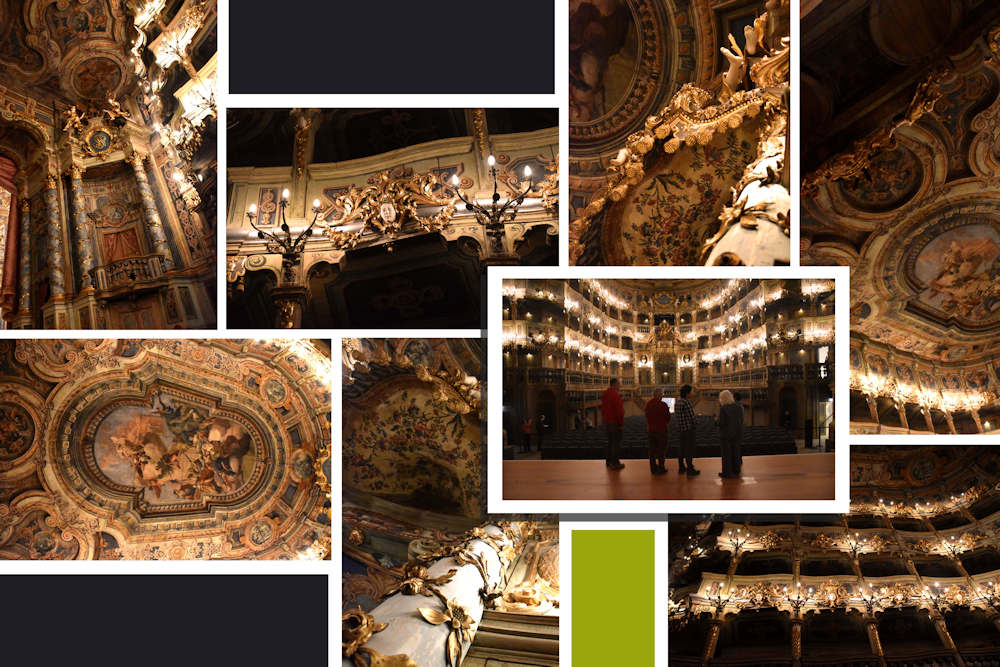
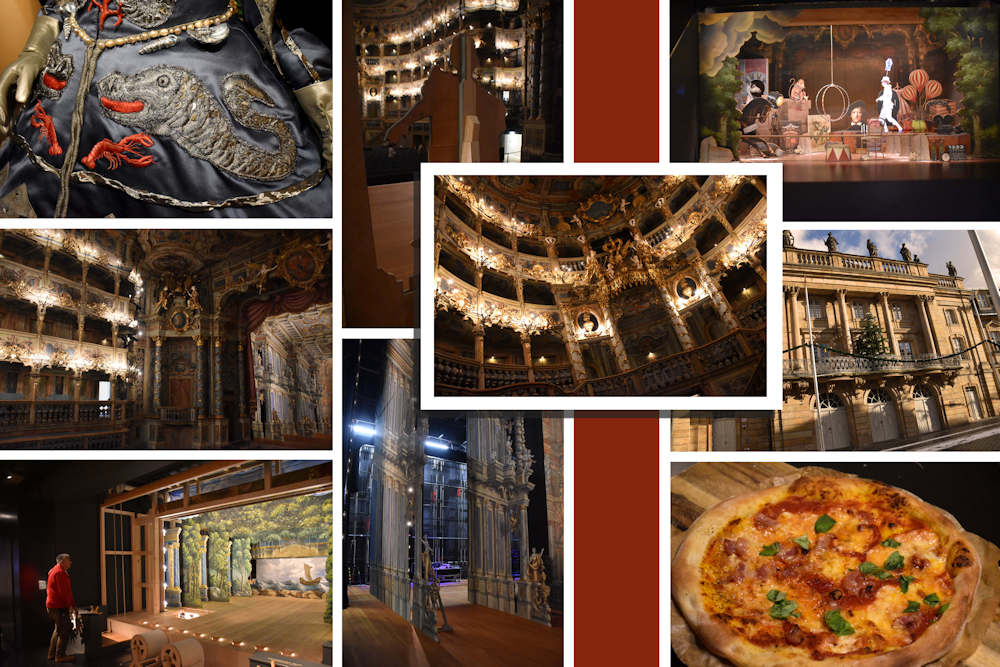
We toured the opera house and enjoyed activating waves and lightning on the mini stage, bottom left. Back at the apartment, I used up flour and tomatoes by making homemade pizzas.
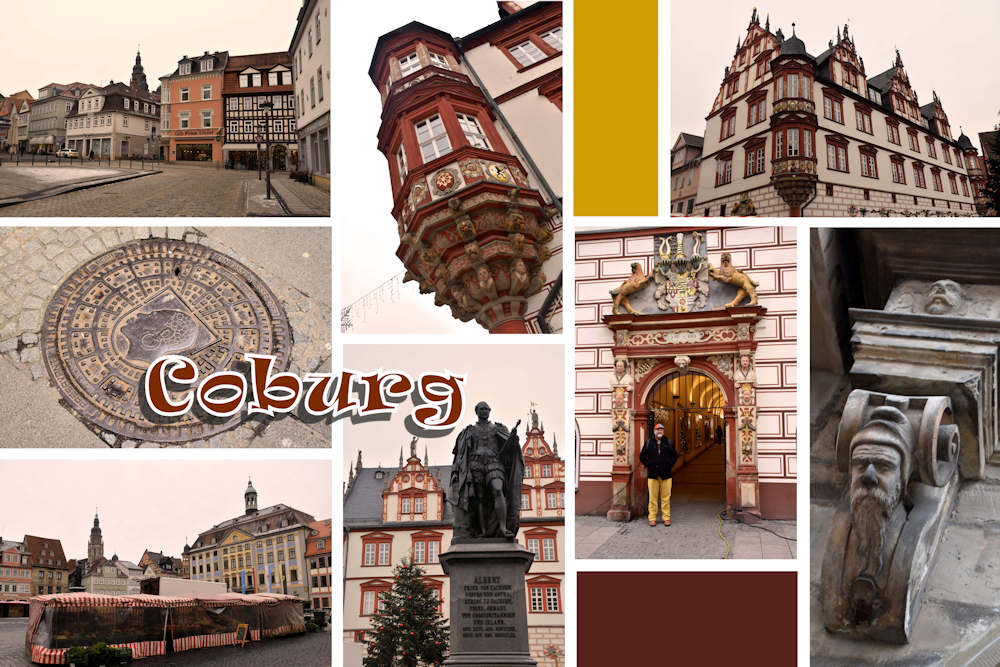
We made a day visit to Coburg, home of the UK's very own Prince Albert. From at least 1380, St. Maurice, The "Coburg Moor, began to feature on city coins and later on versions of the city crest. By the seventeenth century, he was the chief symbol of the city.
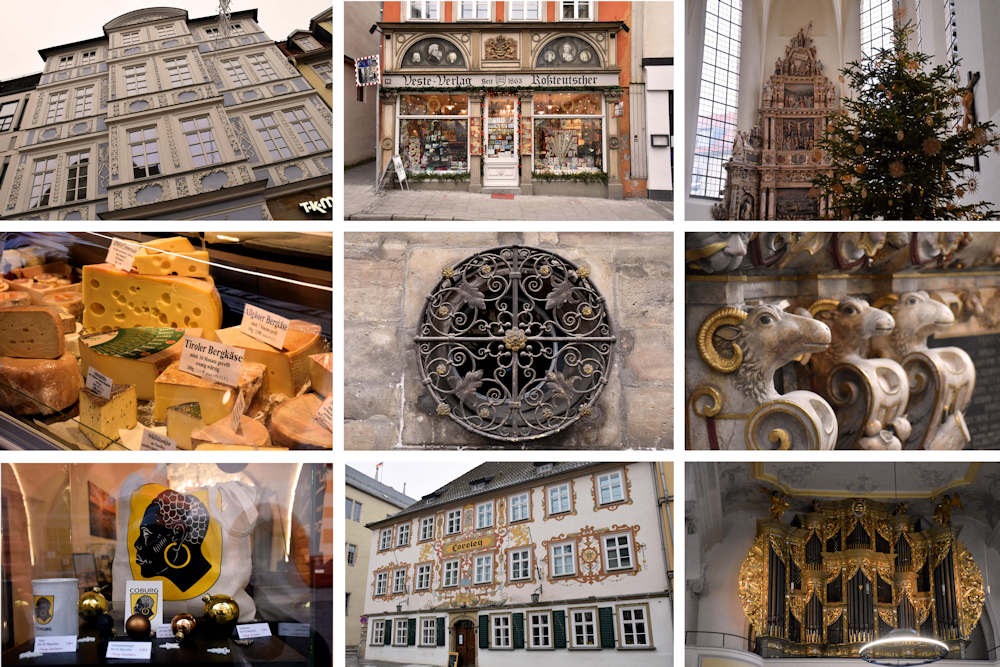
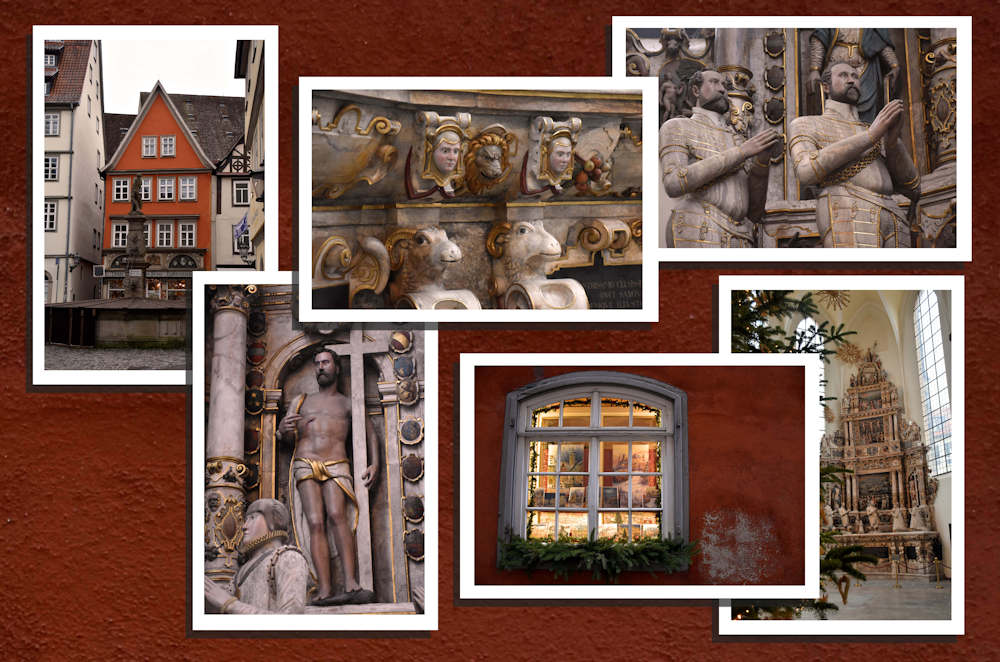
Coburg sights, including Stadtkirche St. Moriz
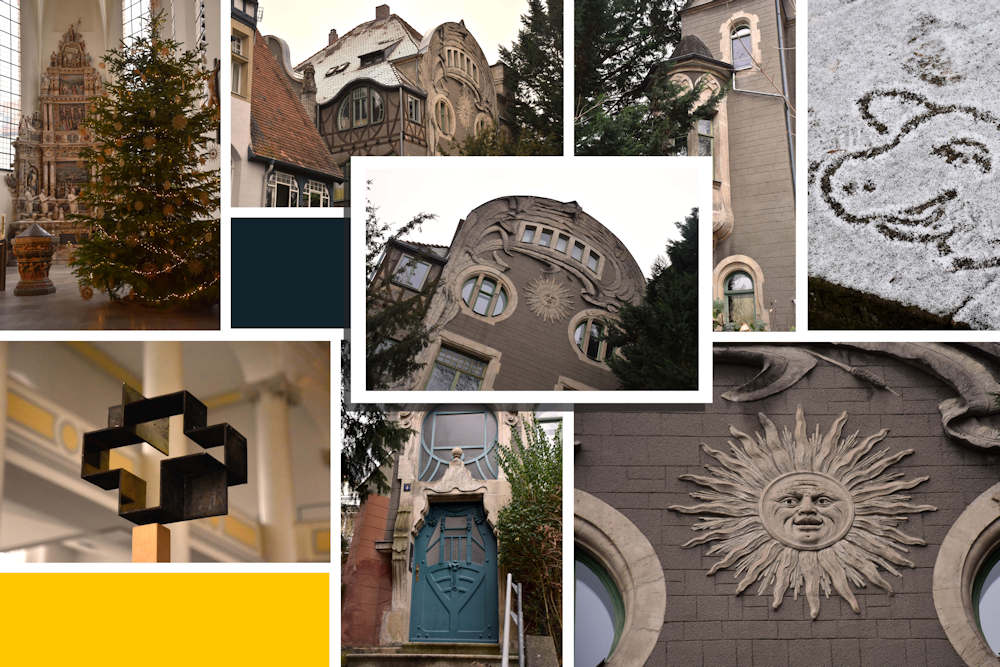
The Sonnenhaus, built in 1902/03, is the only building in Coburg designed in the floral or vegetal Art Nouveau style.
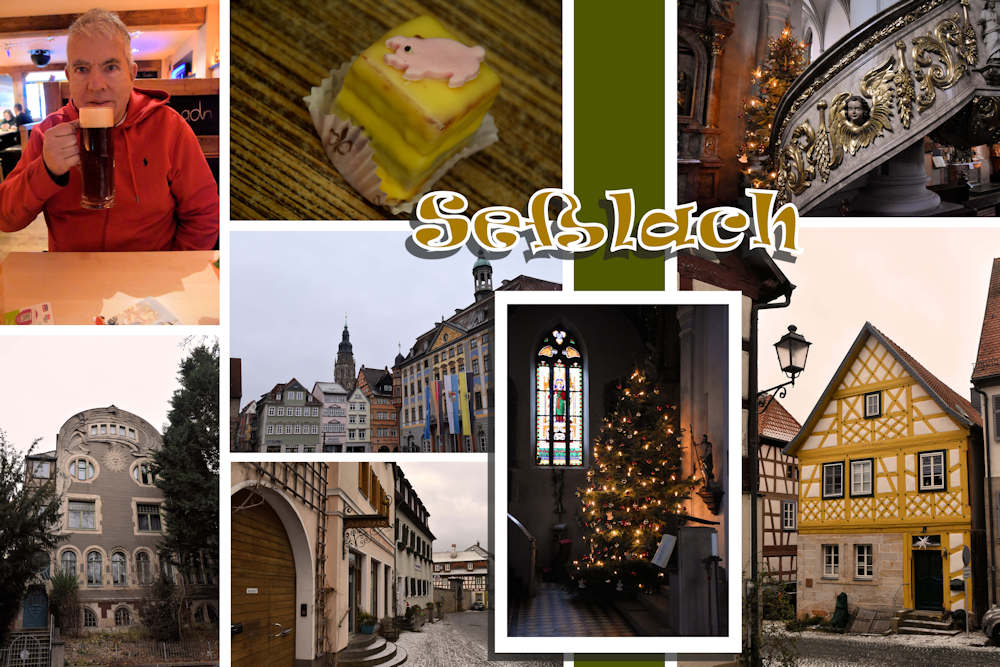
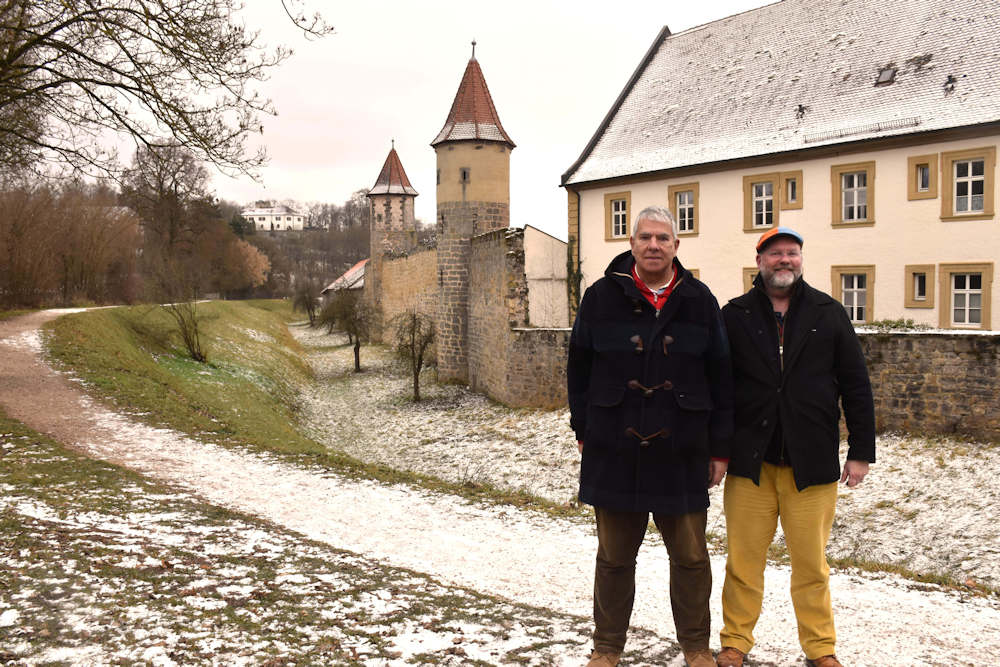
We had lunch in Coburg at a pub with a robot waiter before driving to picturesque Seßlach, notable for its largely intact medieval town wall and overall historic appearance with few modern structures.
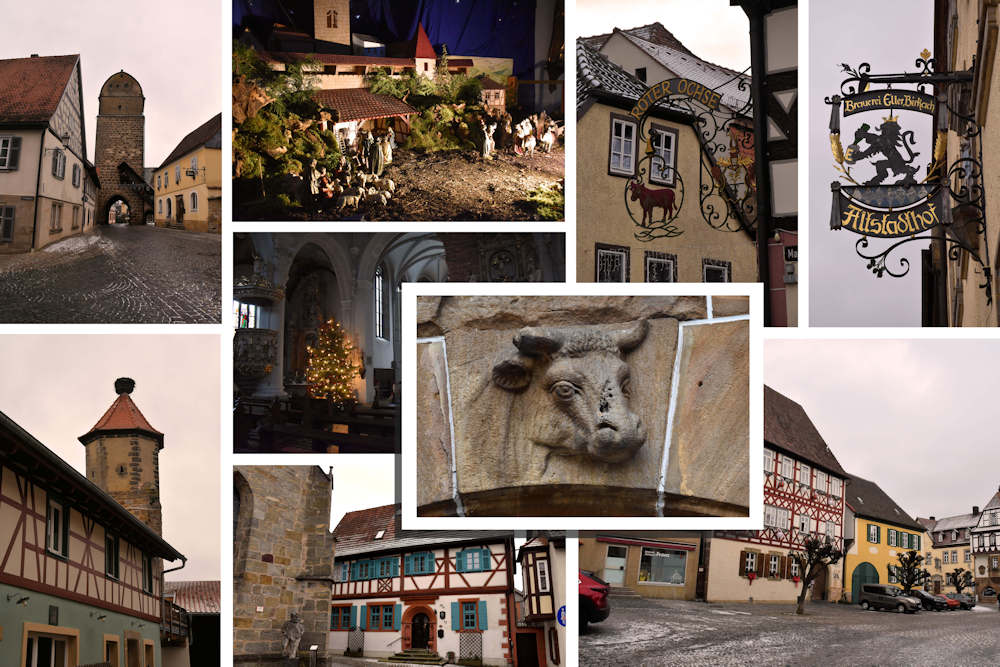
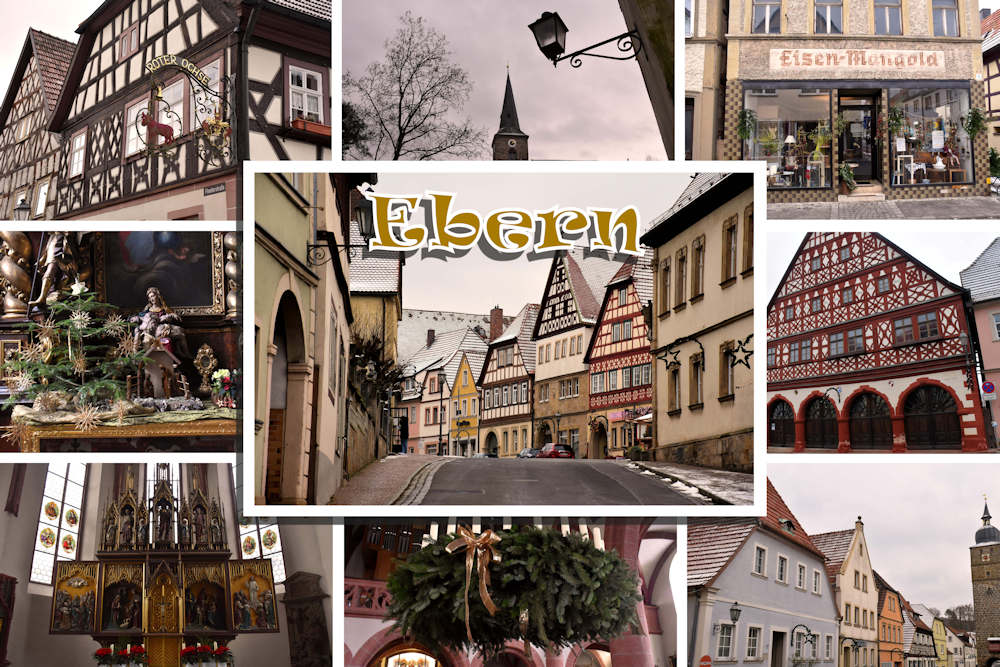
Next stop: Ebern
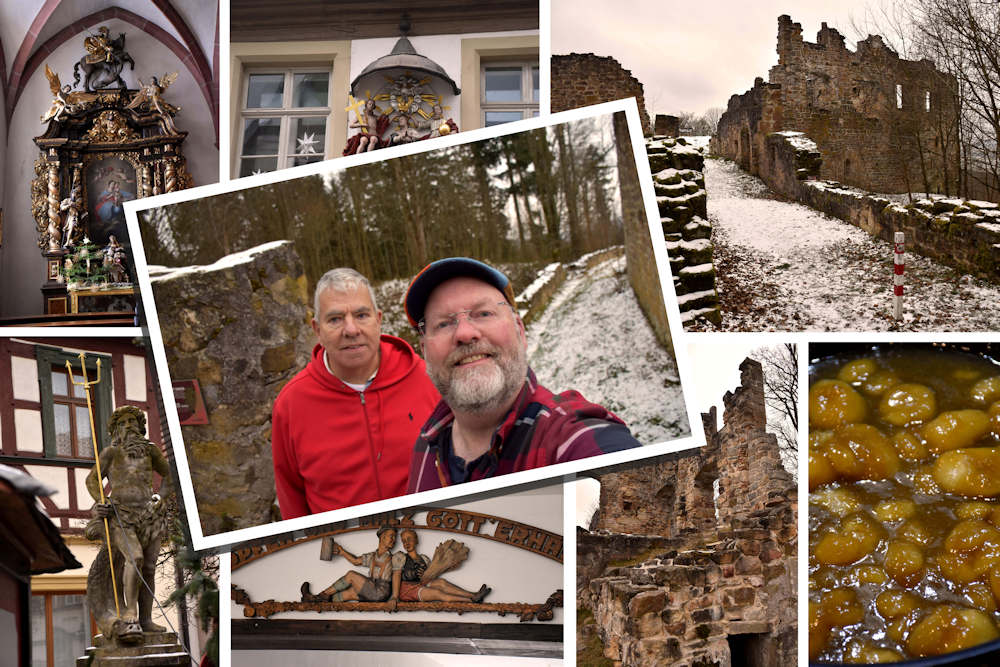
Outside Ebern, we drove the treacherous path to the ruins of Raueneck Castle, which dates to 1180. .Back home, we made crêpes with caramelised apples.
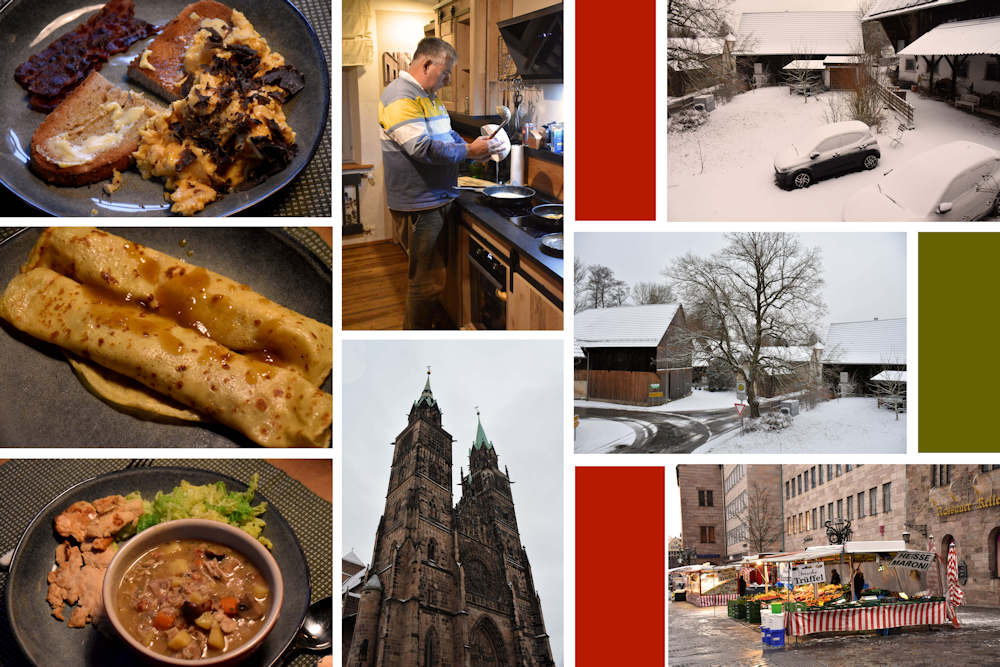
We left for Nürnberg airport in the snow. Our flight was cancelled, so we ended up staying two nights in an aiport hotel, which was an adventure that allowed us to spend more time exploring Nürnberg.
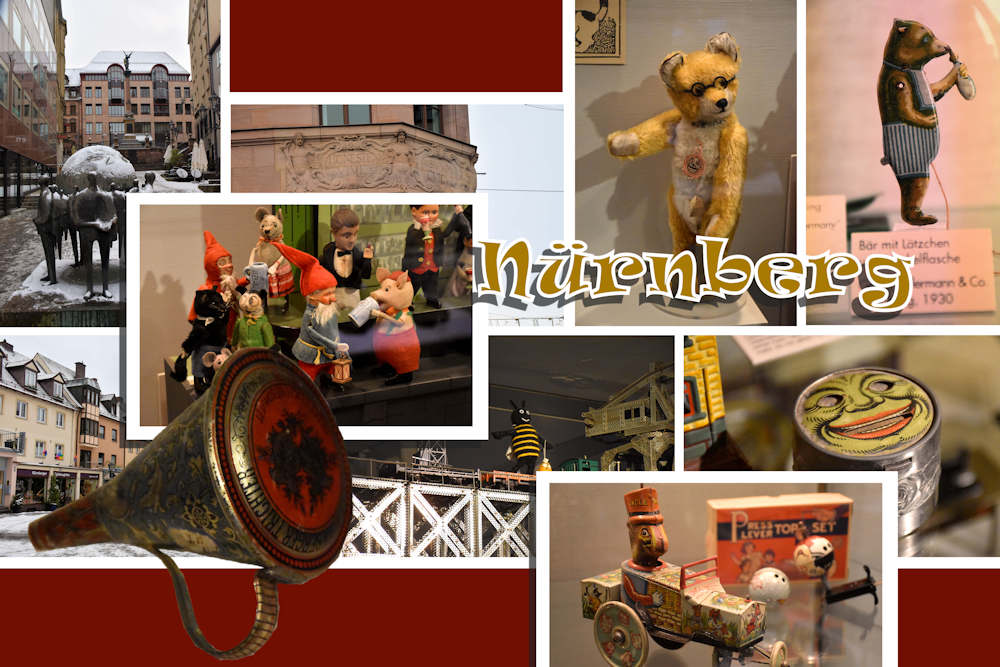
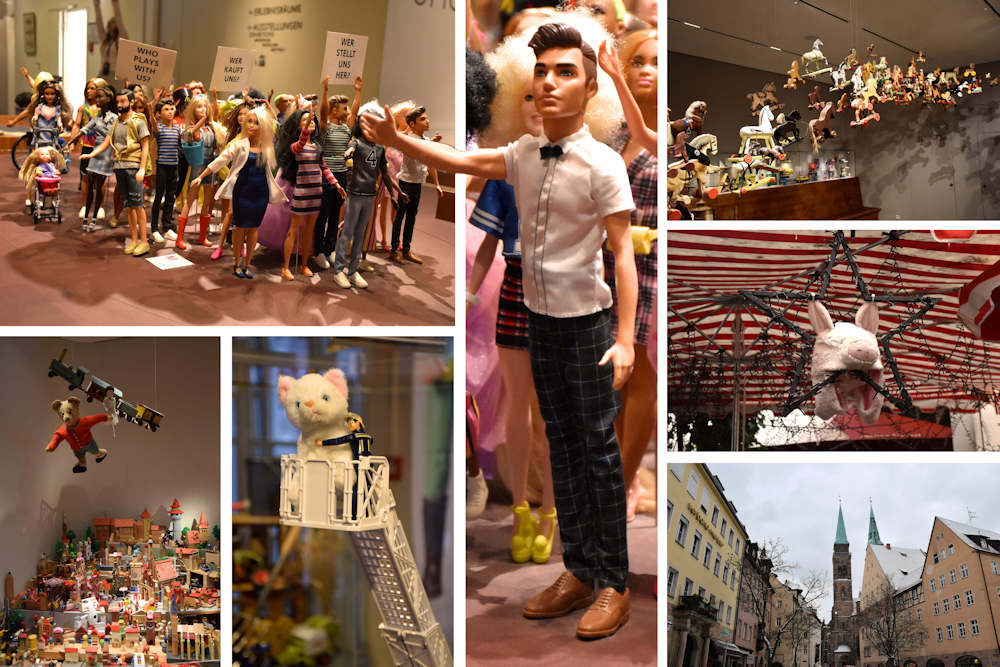
Our favourite activity was the toy museum.
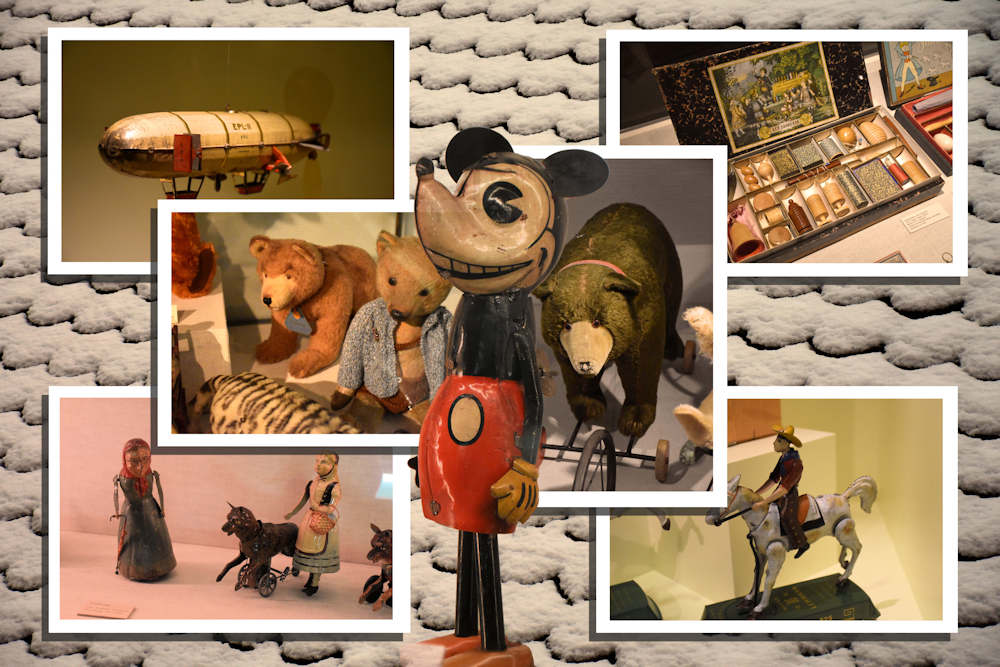
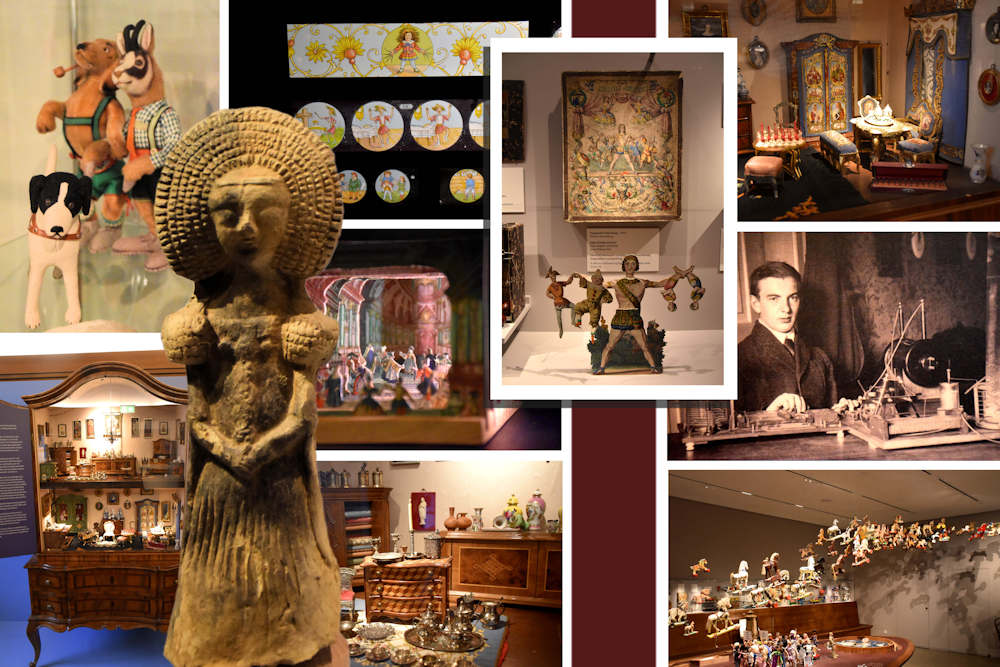
Shown above are some of the toy museum's prize collection, including Shockhead Peter slides and Nürnberg's oldest toy, made in the town in 1350.
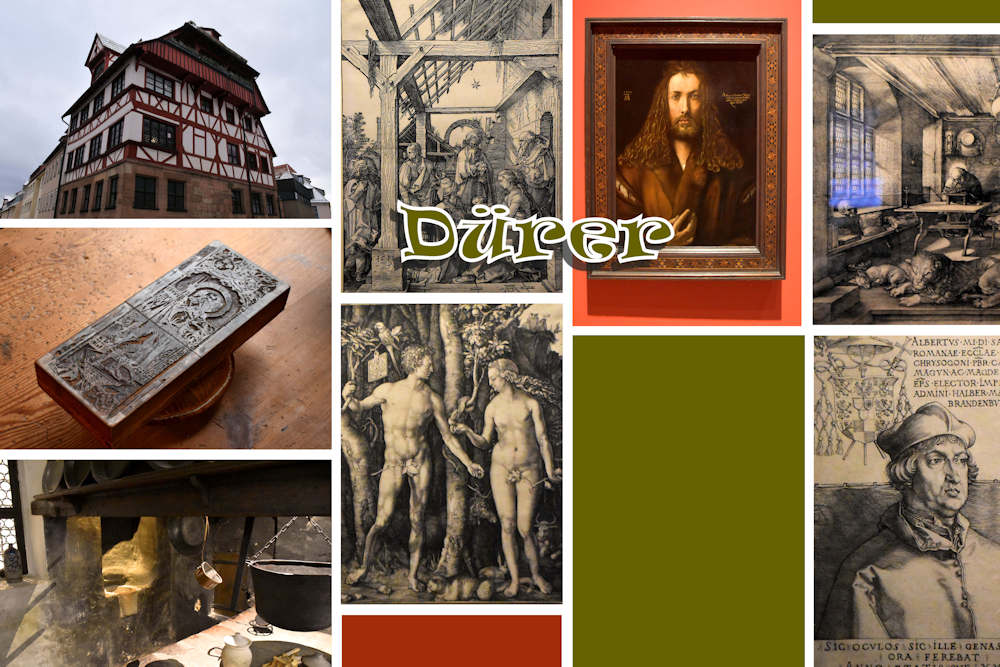
Nürnberg's most famous citizen was Albrecht Dürer, whose house was restored and mainly full of reproductions, though these engravings were original. We saw more of his real artwork the following day.
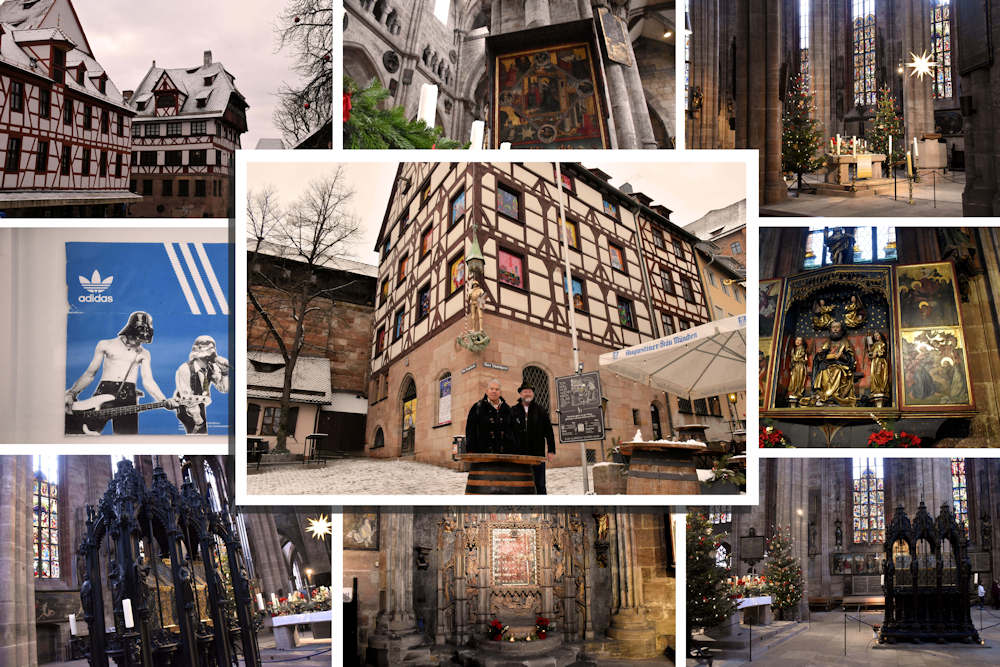
City sights including Saint Sebald's church
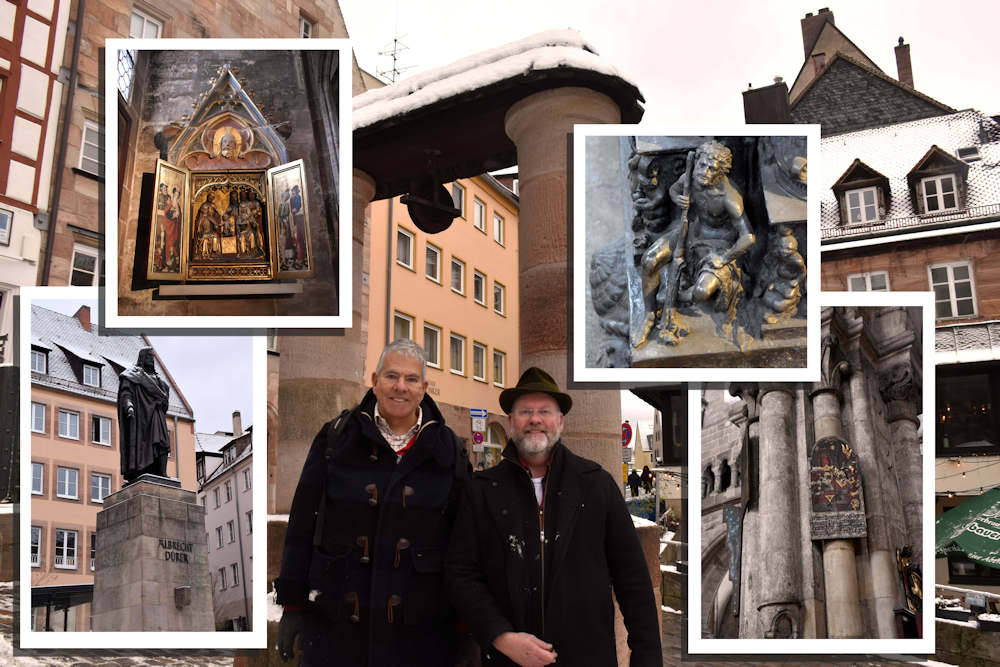
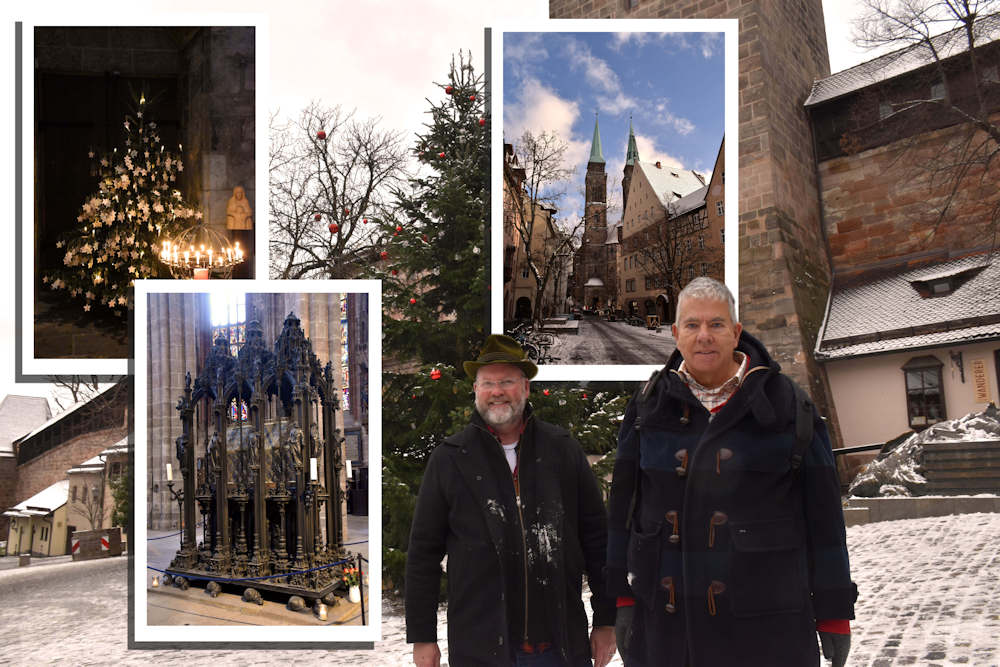
Saint Sebald's tomb, a breathtaking bronze tomb for the city's patron saint, created by Peter Vischer the Elder and his sons (1508–1519), considered a masterpiece of Northern Renaissance casting.
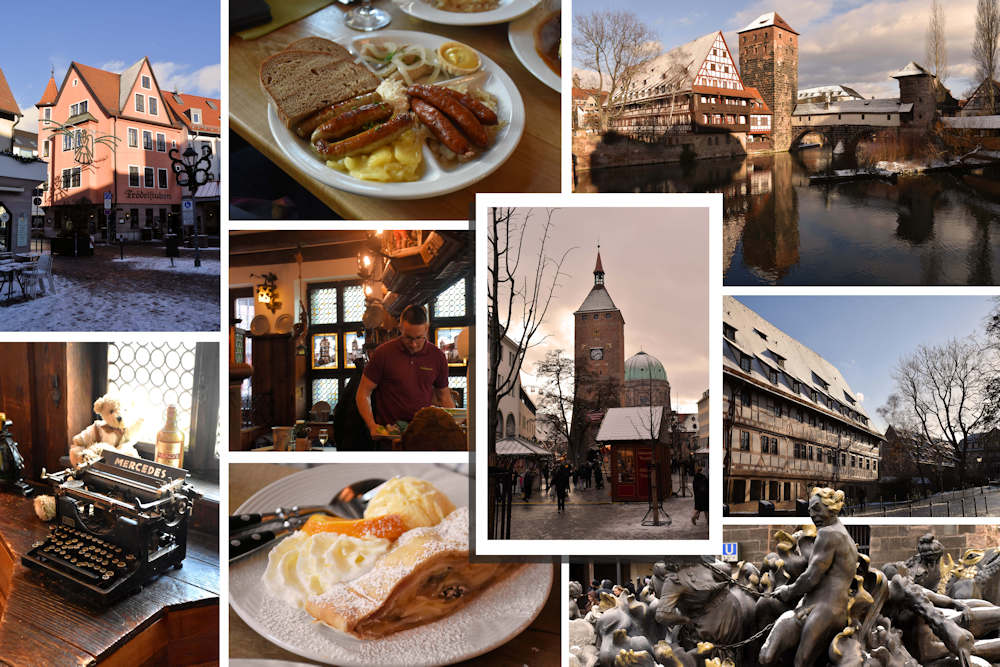
We were hoping to find rustic Bavarian (Franconian) food for lunch. Trödelstuben enabled me to mark two things off my bingo card: Weißwurst and Schweinshaxe.
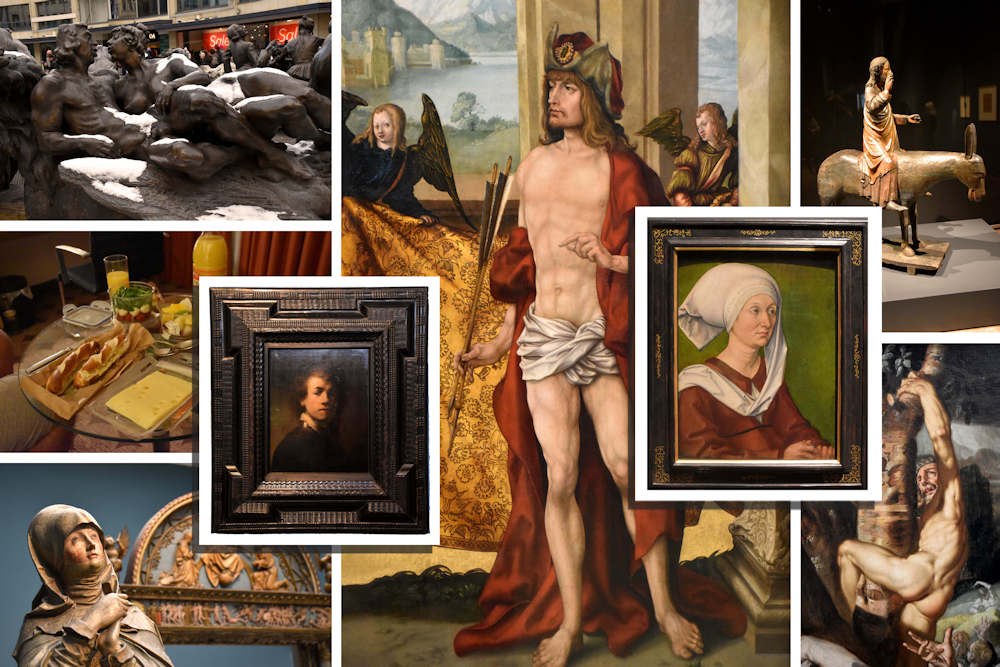
On our final day, we went to the Germanisches Nationalmuseum to see real artwork by Dürer, among many other treasures. Note our aiport hotel picnic.
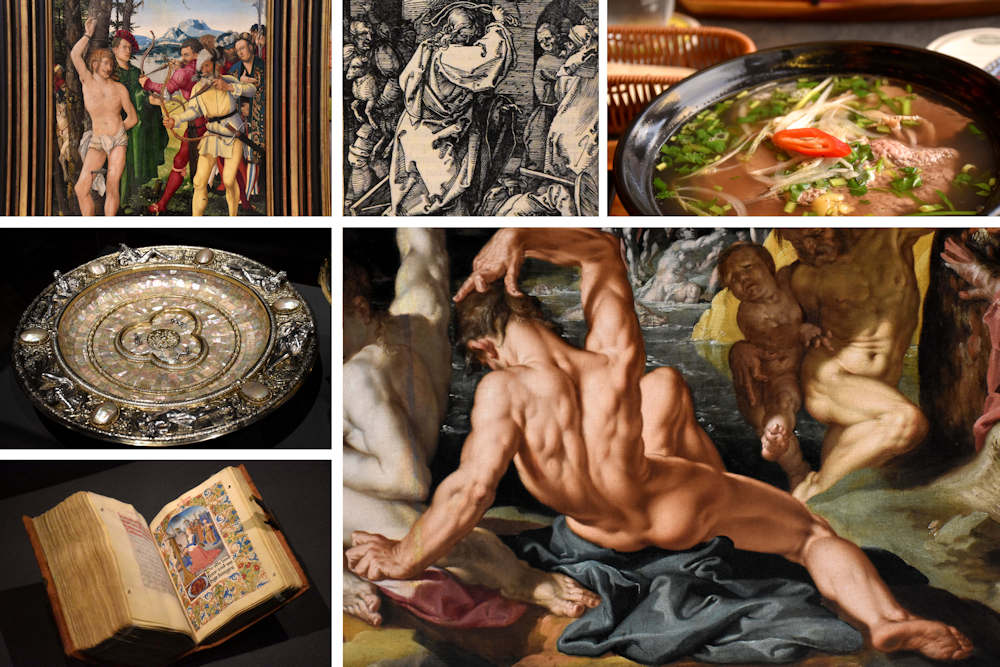
After some saucy Saint Sebastian and spicy Thai noodles, we finally left Germany for home, two days later than planned. Auf Wiedersehen!
Next Christmas, we hope to return to Sicily.
Explore past Christmases: 2024 (Puglia), 2023 (Norway), 2022 (Vienna), 2021, 2020, 2019 (Paris), 2018, 2017, 2016, 2015 (Gers), 2014 (Paris), 2013(Freiburg), 2012 (Dordogne), 2011 (Salzburg), 2010 (Vendee), 2009 (Vendee), 2008, 2007, 2006, 2005, 2004, 2003, 2002, 2001, 2000